Skip to content
Pan-African B2B Business Network
Export guides

Practical guides to African exports

Licences, quality standards, rules of origin and export formalities, country by country. Every point is linked to its official source.

Stuck on an acronym? See the glossary

Country
Sector
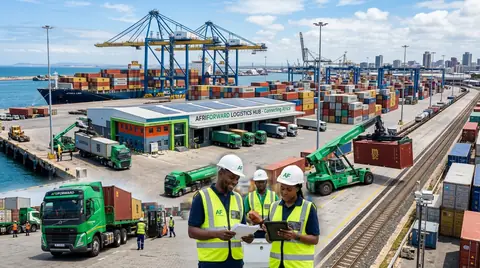
Container terminal with gantry cranes, trucks and logistics staff in safety vests
Ghana
7 min read8 sources

Export from Ghana: GEPA registration, export documents and the port of Tema

Exporting from Ghana involves several bodies: the business registry, the Ghana Export Promotion Authority (GEPA), product regulators such as the Food and Drugs Authority and the Ghana Standards Authority, and Customs at the exit point. This guide sets out the steps and the documents a foreign buyer should ask a Ghanaian exporter to show.

SocoAfrica editorial team

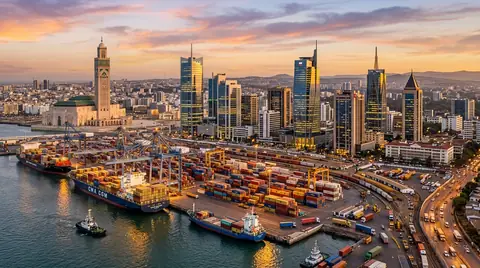
Container port and African coastal city at sunset, with a minaret by the water
Ghana
6 min read9 sources

ORC Ghana: how to check a Ghanaian company's registration, name and TIN

Ghana's Office of the Registrar of Companies (ORC) registers businesses and keeps corporate records, while the Ghana Revenue Authority (GRA) issues tax identification numbers. This guide explains which searches and documents let a buyer confirm that a Ghanaian supplier exists and is in good standing.

SocoAfrica editorial team

Container terminal with gantry cranes, trucks and logistics staff in safety vests
Cameroon
8 min read8 sources

Importing into Cameroon: customs, the GUCE single window and the port of Douala

Importing into Cameroon involves three players: the Directorate General of Customs, the Single Window for Foreign Trade Operations (GUCE) and the port of Douala-Bonabéri. Here are the prior formalities, the CEMAC common external tariff and the customs clearance steps, as official sources describe them.

SocoAfrica editorial team

Container port and African coastal city at sunset, with a minaret by the water
Kenya
7 min read8 sources

Kenya business registration search: BRS, CR12 and KRA PIN checks

In Kenya, a company's existence is checked with the Business Registration Service (BRS) through an official search on eCitizen, formerly called a CR12, and its tax number with the KRA PIN Checker. This guide explains how both checks work, what the Companies Act 2015 requires and which documents to ask a Kenyan supplier for before you sign.

SocoAfrica editorial team

Container port and African coastal city at sunset, with a minaret by the water
Ivory Coast
7 min read7 sources

CEPICI: setting up a company in Côte d'Ivoire and checking an RCCM and taxpayer number

CEPICI runs the one-stop shop where Ivorian companies are set up: a single file produces the trade register entry, the tax registration with its taxpayer account number and the CNPS employer registration. Here are the documents required for an SARL, the official fees and how a buyer can check these numbers with an Ivorian supplier.

SocoAfrica editorial team

Container terminal with gantry cranes, trucks and logistics staff in safety vests
Kenya
8 min read7 sources

Importing into Kenya: KEBS PVoC, KenTrade, import duty and the port of Mombasa

In Kenya, regulated goods must be checked in the exporting country and arrive with a certificate of conformity issued under the KEBS PVoC programme. This guide explains the programme and its exemptions, how import duty and taxes are built up, the role of KenTrade and what to prepare for the port of Mombasa.

SocoAfrica editorial team

Container terminal with gantry cranes, trucks and logistics staff in safety vests
Nigeria
6 min read7 sources

Export from Nigeria: NEPC registration, export documents and NAFDAC rules

Every Nigerian exporter must register with the Nigerian Export Promotion Council (NEPC), and pre-packaged food must also be registered with NAFDAC. Here are the requirements, the documents that travel with a shipment and what a foreign buyer should ask a Nigerian exporter for.

SocoAfrica editorial team

Container port and African coastal city at sunset, with a minaret by the water
Cameroon
7 min read7 sources

Cameroon NIU: getting and checking the Unique Identification Number

The NIU is the number Cameroon's Directorate General of Taxation assigns to every taxpayer once its online tax registration is complete. Here is what it is used for, how it relates to the RCCM and the CFCE, and how a buyer can check a supplier's NIU before signing.

SocoAfrica editorial team

Container terminal with gantry cranes, trucks and logistics staff in safety vests
Pan-African
8 min read6 sources

Incoterms 2020: the 11 ICC rules, the table of obligations and how to choose

The Incoterms 2020 rules of the International Chamber of Commerce allocate transport, insurance, customs clearance and risk between seller and buyer. Here is the list of the eleven rules, what each one requires, the status of the revision announced by ICC and a method for choosing your Incoterm.

SocoAfrica editorial team

Container terminal with gantry cranes, trucks and logistics staff in safety vests
Pan-African
7 min read7 sources

CIF and CFR Incoterms: risk transfer, insurance and trade with Africa

CIF and CFR are two Incoterms 2020 rules reserved for sea and inland waterway transport: the seller pays freight to the port of destination, but risk passes to the buyer once the goods are loaded on board. Here are their differences, CIF insurance and their limits for containers and Africa.

SocoAfrica editorial team

Container port and African coastal city at sunset, with a minaret by the water
Pan-African
7 min read8 sources

Certificate of origin: non-preferential or preferential, who issues it and with which documents

The term certificate of origin actually covers two families of documents: the non-preferential certificate, often endorsed by a chamber of commerce, and the preferential proof of origin, which falls under customs. This guide explains who issues what, which information to prepare and how it works in Morocco and under the AfCFTA.

SocoAfrica editorial team

Container terminal with gantry cranes, trucks and logistics staff in safety vests
Pan-African
7 min read8 sources

EUR.1 customs: movement certificate, preferential origin and EU–Africa agreements

The EUR.1 certificate allows your customer to pay a reduced or zero customs duty when the goods originate in a country linked to the European Union by an agreement. But it is no longer the only possible proof: depending on the agreement, the origin declaration of an approved or registered (REX) exporter replaces it.

SocoAfrica editorial team

Container port and African coastal city at sunset, with a minaret by the water
Pan-African
7 min read8 sources

AfCFTA: definition, objectives and how Africa's free trade area works

The AfCFTA, or African Continental Free Trade Area, is the agreement that aims to bring the continent's markets together into a single trading space. Here is its definition, its key dates, its protocols and what it actually changes for a small business exporting within Africa.

SocoAfrica editorial team

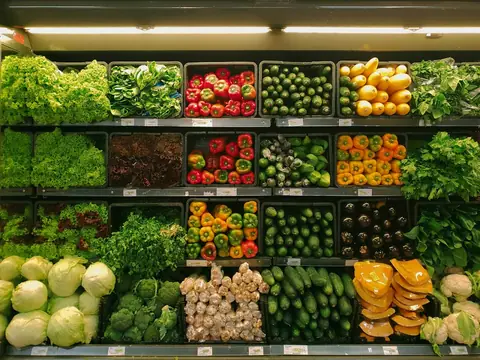
Fresh produce display: peppers, cucumbers, lettuce and cabbage
Pan-African
7 min read8 sources

Importing from Africa: products, EU formalities and choosing a supplier

Importing from Africa into the European Union rests on three pillars: knowing what the continent exports, complying with EU customs and sanitary formalities, and vetting your supplier. This guide draws on the World Bank, UNCTAD, the European Commission and French customs.

SocoAfrica editorial team

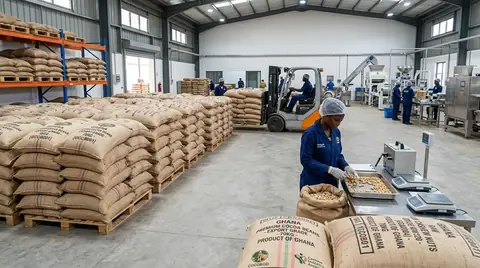
Warehouse of bean sacks on pallets, with a quality check on a scale
Ivory Coast
7 min read11 sources

Cashew nuts: the tree, the harvest and exports from Côte d'Ivoire

The cashew nut grows beneath a fleshy false fruit, on a tree native to the Americas that is now grown across the tropics. This guide explains the tree, harvesting and drying, then Côte d'Ivoire's position as the world's leading producer, its local processing and its export rules.

SocoAfrica editorial team

Two amber glass bottles of oil on a shelf, between two certificates
Morocco
6 min read6 sources

Argan oil price: what drives the cost per litre and how to buy in bulk

The price of argan oil depends on the raw material, the process, the label and the packaging, and it has moved sharply with recent droughts. Here are the factors that explain the gap between two litres, the only prices we found in dated sources, and advice for buying in bulk.

SocoAfrica editorial team

Container terminal with gantry cranes, trucks and logistics staff in safety vests
Pan-African
7 min read8 sources

Freight forwarder for Africa: how to choose one when exporting from France

A freight forwarder for Africa arranges the carriage, the formalities and sometimes the customs clearance of your goods. Here is the difference between a forwarder, a transport commission agent and a registered customs representative, the ports to know and the questions to ask before signing.

SocoAfrica editorial team

Savannah at sunset, with a lone acacia tree and mountains on the horizon
Senegal
3 min read3 sources

Exporting seafood from Senegal: the role of the DITP

In Senegal, seafood exports go through the Fisheries Processing Industries Directorate (DITP), in charge of inspection and sanitary certification. Fresh sea fish remains the leading seafood export.

SocoAfrica editorial team