Exporting to Africa: which markets, which products and which steps to follow
SocoAfrica editorial team · Updated on
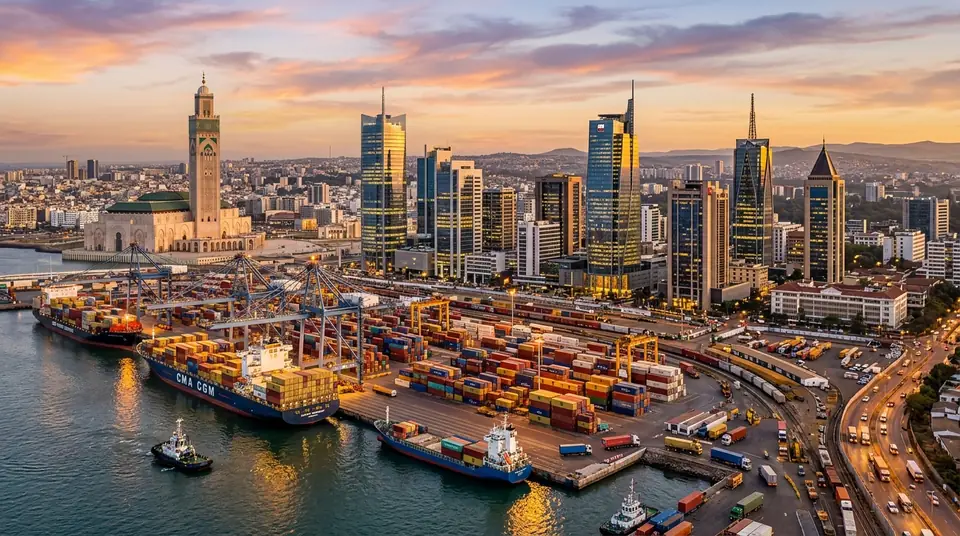
Exporting to Africa means reading trade data before choosing a country, then building a solid chain: partners, Incoterms, payment and customs. This guide draws on data from the World Bank, the International Chamber of Commerce and the regional economic communities.
Key points
- According to the World Bank's WITS database, Sub-Saharan Africa imported 432,159 million dollars' worth of goods in 2023.
- Also according to WITS, consumer goods accounted for 42.95% of those imports in 2023 and capital goods for 25.89%.
- ECOWAS lists 12 Member States on its website, and WAEMU brings together eight.
- According to tralac, 50 countries had deposited their AfCFTA instrument of ratification as of 4 September 2026.
Exporting to Africa: what the figures say
The Sub-Saharan Africa trade profile published by the World Bank on its WITS platform gives a useful order of magnitude. In 2023 the region imported 432,159 million dollars' worth of goods (CIF value) and exported 393,138 million dollars (FOB value). The market imports more than it exports, which makes it a genuine outlet for foreign suppliers.
The region's main suppliers in 2023 were China (81,089 million dollars), India (32,305 million), South Africa (25,789 million), the United Arab Emirates (22,943 million) and the United States (22,322 million). South Africa's place in this ranking is a reminder that part of the trade already takes place between countries of the continent.
For exports to Africa, these regional averages are not enough: each country has its own import structure. Databases such as the World Bank's WITS or the International Trade Centre's ITC Trade Map let you drill down to a single country and product code before committing prospecting costs.
What to export to Africa: the most imported products
According to WITS, Sub-Saharan Africa's imports in 2023 broke down as follows: consumer goods 42.95%, capital goods 25.89%, intermediate goods 20.43% and raw materials 8.15%. Machinery, vehicles and equipment therefore weigh heavily, alongside everyday consumer products.
At the most detailed level of the nomenclature, the leading import in 2023 was refined petroleum oils, worth 89.3 billion dollars. It was followed by armoured vehicles, crude petroleum oils, packaged medicines (6.4 billion dollars) and transmission apparatus for radiotelephony (5.5 billion dollars).
This structure mirrors that of the region's exports. Again according to WITS, raw materials accounted for 48.26% of Sub-Saharan Africa's exports in 2023, but only 8.15% of its imports. The region mainly sells raw products and buys a large share of the processed goods it consumes or uses in production. In other words, the region's main exports remain raw materials, while it mostly imports processed goods.
For an export wholesaler serving Africa, the question is therefore not only what to sell, but to which segment: consumer goods distribution, equipment for industry and construction sites, or inputs for agriculture and processing.
The steps of exporting to Africa
Market research comes first: import flows of the target product by country, main competing suppliers, applicable customs duties and technical standards. Country statistics guide the choice of two or three pilot markets rather than scattered prospecting.
Next comes the search for partners: importer, distributor, sales agent. Before any commitment, check the company's legal existence (trade register, tax identifier), its references and its real address. A local partner knows the distribution channels and payment practices of its market.
The sales contract must specify an Incoterm. The International Chamber of Commerce (ICC) describes the Incoterms 2020 as eleven three-letter rules that allocate obligations, costs and risks between seller and buyer. The ICC states, for example, that the CIF rule is reserved for maritime transport, that the CIP rule requires a higher level of insurance, and that the DPU rule replaced the former DAT.
The payment method is chosen according to the level of trust: transfer at order, documentary collection or a documentary credit confirmed by a bank. Then comes customs: an export declaration at departure, followed by import clearance in the destination country, often entrusted to a local freight forwarder or customs broker.
Exports to Africa by country: the regional blocs
The African Continental Free Trade Area (AfCFTA) entered into force on 30 May 2019, according to tralac. As of 4 September 2026, 50 countries had deposited their instrument of ratification, again according to tralac. For an exporter, the point is to follow the concrete application of tariff concessions country by country.
In West Africa, ECOWAS lists 12 Member States on its website, including Ghana, Nigeria, Senegal and Côte d'Ivoire. WAEMU (UEMOA) brings together eight countries: Benin, Burkina Faso, Côte d'Ivoire, Guinea-Bissau, Mali, Niger, Senegal and Togo.
In Central Africa, CEMAC has six States: Cameroon, the Central African Republic, Congo, Gabon, Equatorial Guinea and Chad. In the East, the East African Community (EAC) groups eight Partner States, including Kenya, Tanzania, Uganda and Rwanda.
In the South, the Southern African Customs Union (SACU), established in July 1910, brings together Botswana, Eswatini, Lesotho, Namibia and South Africa. It describes itself as the oldest functioning customs union. Setting up in a member country of a bloc gives you a base to serve its neighbours.
Preparing your exports to Africa with SocoAfrica
The SocoAfrica directory lists manufacturers, cooperatives and exporters in eight countries: Morocco, Senegal, Côte d'Ivoire, Ghana, Nigeria, Cameroon, Kenya and South Africa. You can use it to identify distributors and partners by country and sector.
If you are looking for a specific buyer or supplier, posting a request for quotation on /rfq/ is free. Before signing with a new partner, the company verification service (/verification/) lets you check its legal identity; the Verified and Premium levels are available on quotation.
Frequently asked questions
- What are the products Africa imports most?
- According to WITS (World Bank), the leading import of Sub-Saharan Africa in 2023 was refined petroleum oils, worth 89.3 billion dollars. By broad group, consumer goods accounted for 42.95% of imports and capital goods for 25.89%.
- What should I export to Africa?
- WITS data show strong demand for consumer goods, equipment and intermediate goods. The right product depends on the country: check its import flows by product code before prospecting.
- Which countries are members of WAEMU (UEMOA)?
- According to the UEMOA website, the union brings together eight countries: Benin, Burkina Faso, Côte d'Ivoire, Guinea-Bissau, Mali, Niger, Senegal and Togo.
- How many countries have ratified the AfCFTA?
- According to tralac, 50 countries had deposited their instrument of ratification of the agreement as of 4 September 2026.
This guide summarises official texts as of the date shown. Rules change: check them with the body cited before any transaction.
Sources
- World Bank, WITS — Sub-Saharan Africa Trade Summary 2023 (2023)
- ICC — Incoterms 2020 (2020)
- tralac — AfCFTA key features (2026)
- CEDEAO — Member States (2026)
- WAEMU — Official website, member states (2026)
- CEMAC — Official website (2026)
- EAC — EAC Partner States (2026)
- SACU — Southern African Customs Union (2026)
Looking for a supplier?
Post a request for quotation: our team forwards it to listed suppliers in the relevant sector.