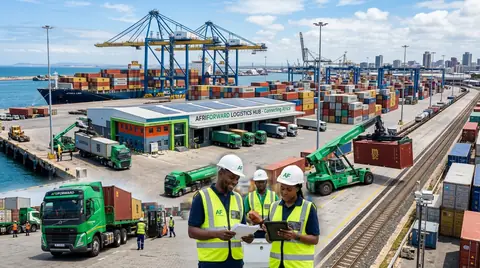
Teranga Port & Inland Logistics
Logistics, Freight & Shipping
Container handling, bonded warehousing and inland corridors from Dakar
Ocean container freight, cold chain refrigerated transport, bonded customs warehousing and cross-border trucking corridors.
Pilot phase: the listings shown are demonstrations, labelled as such.

Logistics, Freight & Shipping
Container handling, bonded warehousing and inland corridors from Dakar

Logistics, Freight & Shipping
Port logistics, cold chain and freight forwarding in West Africa
Logistics, Freight & Shipping sector: 2 listings have it as main sector in the SocoAfrica directory. Countries where the sector is covered: Morocco, Senegal, Ivory Coast, Ghana, Nigeria, Cameroon and Kenya.
Practical guides related to the sector, each with its official sources:
CIF and CFR Incoterms: risk transfer, insurance and trade with Africa: CIF and CFR are two Incoterms 2020 rules reserved for sea and inland waterway transport: the seller pays freight to the port of destination, but risk passes to the buyer once the goods are loaded on board. Here are their differences, CIF insurance and their limits for containers and Africa.
FOB Incoterm: delivery on board, uses and limits for trade with Africa: Under FOB, the seller delivers the goods loaded on board the vessel nominated by the buyer at the agreed port of shipment, and risk passes at that moment. Here is when this maritime rule fits, why ICC prefers FCA for containers, and what to know for Africa.
CIP and CPT Incoterms: carriage paid, risk transfer and insurance into Africa: Under CPT and CIP, the seller pays carriage to the place of destination, but risk passes to the buyer as soon as the goods are handed to the first carrier. CIP adds stronger insurance since 2020: here is how these rules work and what they mean for trade with Africa.
A buyer can post a free request for quotation for this sector: our team reviews it, then forwards it to listed suppliers. A company in the sector can list for free and apply for the Verified badge, awarded after a check of its documents.
CIF and CFR are two Incoterms 2020 rules reserved for sea and inland waterway transport: the seller pays freight to the port of destination, but risk passes to the buyer once the goods are loaded on board. Here are their differences, CIF insurance and their limits for containers and Africa.
Under FOB, the seller delivers the goods loaded on board the vessel nominated by the buyer at the agreed port of shipment, and risk passes at that moment. Here is when this maritime rule fits, why ICC prefers FCA for containers, and what to know for Africa.
Under CPT and CIP, the seller pays carriage to the place of destination, but risk passes to the buyer as soon as the goods are handed to the first carrier. CIP adds stronger insurance since 2020: here is how these rules work and what they mean for trade with Africa.
In Morocco, customs clearance goes through the Customs and Indirect Taxes Administration (ADII) and its online BADR system, for both imports and exports. Here are the steps, the documents to gather and how to estimate duties and taxes with the official tools, without relying on rates copied elsewhere.
Tanger Med is the port and industrial complex of northern Morocco, on the Strait of Gibraltar. For a buyer or manufacturer, here are its terminals, its 2025 traffic, business zones such as Tanger Free Zone and its role in car exports.
Importing into Senegal means knowing the Direction générale des douanes, the GAINDE IT system and the ECOWAS common external tariff. This guide covers tariff categories, levies, documents and the customs clearance steps.
A freight forwarder for Africa arranges the carriage, the formalities and sometimes the customs clearance of your goods. Here is the difference between a forwarder, a transport commission agent and a registered customs representative, the ports to know and the questions to ask before signing.
Post a request for quotation: our team forwards it to listed suppliers.