FOB Incoterm: delivery on board, uses and limits for trade with Africa
SocoAfrica editorial team · Updated on
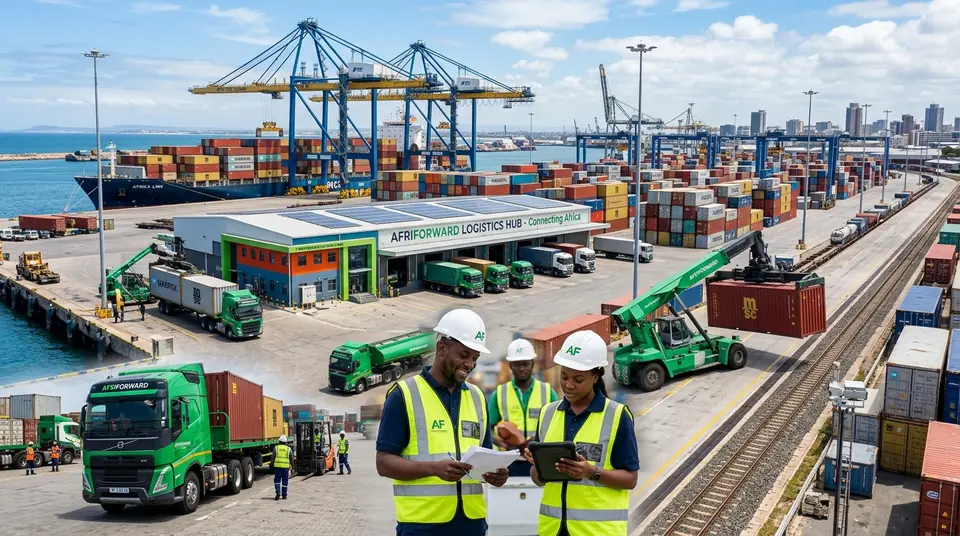
Under FOB, the seller delivers the goods loaded on board the vessel nominated by the buyer at the agreed port of shipment, and risk passes at that moment. Here is when this maritime rule fits, why ICC prefers FCA for containers, and what to know for Africa.
Key points
- According to ICC Academy (2025), under FOB the seller delivers the goods loaded on board the vessel nominated by the buyer at the port of shipment.
- French Customs states that costs and risks pass to the buyer once the goods are loaded on board, with loading falling on the seller.
- ICC Academy notes that for containerised goods the seller usually hands them over at the terminal, not on board, and that FCA is then more appropriate.
- Since 2020, the FCA rule allows the parties to agree that the seller receives an on-board bill of lading, useful for a letter of credit.
- In Senegal, ICC cites a 1978 decree requiring shippers to buy FOB and sell CIF, while noting that practice runs the other way.
FOB Incoterm: definition of Free On Board
FOB stands for Free On Board. According to ICC Academy (2025), the seller delivers the goods loaded on board the vessel nominated by the buyer at the port of shipment. You will sometimes read "freight on board incoterms": ICC's official name remains Free On Board.
French Customs specifies that costs and risks transfer as soon as the goods are loaded on board the vessel nominated by the buyer at the agreed port. Unlike FAS, where the goods are simply placed alongside the ship, loading is the seller's responsibility.
FOB is one of the four maritime Incoterms, together with FAS, CFR and CIF. It is therefore used only for sea or inland waterway transport.
Who does what under FOB?
According to ICC Academy, the seller is responsible for the goods until they are loaded. The buyer, for its part, must give the seller the vessel name and the loading point in the port in good time. Late information from the buyer can therefore hold up delivery.
Once the goods are on board, the risk of loss or damage passes to the buyer, ICC Academy notes. French Customs adds that the buyer then bears the sea freight and the unloading of the vessel.
For a buyer importing into the European Union on FOB terms, one customs value point matters: according to French Customs, transport costs borne by the buyer up to the place of entry into the Union, if not already included in the price, are added to the customs value (article 71 of the Union Customs Code).
When to use FOB incoterms?
French Customs states that, in practice, maritime Incoterms are reserved for bulk and conventional sea transport. FOB therefore fits when the goods are genuinely handed over to the ship: dry bulk, liquid bulk or non-containerised goods.
In these cases, the moment of loading is clear and verifiable, and the transfer of risk on board matches the reality of the handover. That match is what makes the rule clear for both parties.
For any other situation, and container transport in particular, French Customs points out that carriage is governed by the multimodal Incoterms.
Why ICC recommends FCA rather than the FOB incoterm for containers
ICC Academy (2025) explains that for containerised goods, the seller typically delivers them to the container terminal, not on board the vessel. It concludes that the FCA (Free Carrier) rule is more appropriate. Under FOB, the seller would remain exposed to risk between handover at the terminal and loading, although it no longer has the goods in hand.
A common objection concerned letters of credit, which often require an on-board bill of lading. Incoterms 2020 addresses this: according to ICC, FCA now provides that the parties may agree that the buyer will instruct the carrier to issue an on-board bill of lading to the seller, which the seller then tenders, often through banks.
The FCA rule is covered in detail in another guide on our blog. The key point is that it covers a container handed over at the terminal, whereas FOB assumes delivery on board.
FOB and trade with Africa
In its document on national regulatory barriers (updated January 2025), ICC cites the case of Senegal: decree no. 78-179 of 2 March 1978 required Senegalese shippers to buy FOB and sell CIF. ICC specifies that certain provisions have not been applied and that, in practice, Senegalese shippers are reported to prefer the opposite.
This example shows that an Incoterm is not chosen on commercial logic alone. The FOB buyer arranges freight itself, and insurance of the main carriage is up to the buyer if it wants the goods covered. ICC notes that several African countries, including Ghana, Ivory Coast, Nigeria, Senegal and Kenya, do not allow foreign transport insurance for CIF or CIP: buying FOB with local insurance is often simpler there.
Finally, Team France Export (2026) points out that an Incoterm without a precise place opens the door to disputes. State the exact port of shipment and the version, for example "FOB [port of shipment] Incoterms 2020".
Preparing a FOB sale with SocoAfrica
A FOB sale depends on good coordination between seller, buyer and freight forwarder at the port of shipment. The SocoAfrica directory helps you find exporters, freight forwarders and port service providers by country.
You can check a company's verification level on /verification/ and post a free request for quotation on /rfq/ to receive freight or forwarding offers.
Frequently asked questions
- What does the FOB incoterm mean?
- FOB stands for Free On Board. The seller delivers the goods loaded on board the vessel nominated by the buyer at the agreed port of shipment.
- When does risk pass to the buyer under FOB?
- According to ICC Academy, risk passes to the buyer when the goods are loaded on board the vessel at the port of shipment.
- Can FOB be used for a container?
- ICC Academy states that for containerised goods, usually handed over at the terminal, the FCA rule is more appropriate than FOB.
- Does FOB mean freight on board?
- No. In ICC's rules, FOB stands for Free On Board. "Freight on board" is a common but inaccurate expression.
This guide summarises official texts as of the date shown. Rules change: check them with the body cited before any transaction.
Sources
- ICC Academy — FOB & FAS Incoterms® 2020 explained: Key differences (2025)
- French Customs — Technical sheet: the new Incoterms 2020 rules and customs value (in French) (2021)
- ICC — Incoterms® 2020 (2020)
- ICC — National regulatory barriers to the Incoterms® 2020 rules (January 2025 update) (2025)
- Team France Export — Bien choisir ses Incoterms® 2020 (2026)
Looking for a supplier?
Post a request for quotation: our team forwards it to listed suppliers in the relevant sector.