Freight forwarder for Africa: how to choose one when exporting from France
SocoAfrica editorial team · Updated on
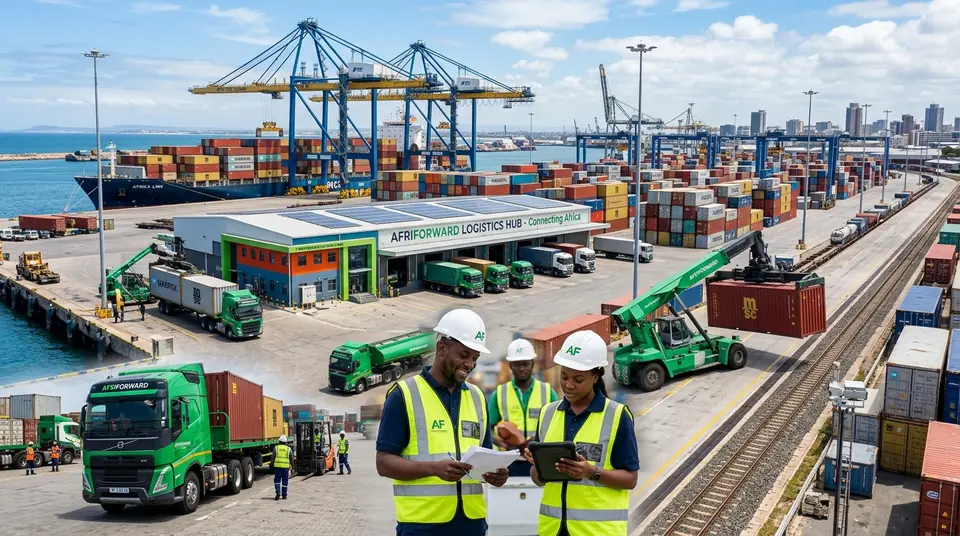
A freight forwarder for Africa arranges the carriage, the formalities and sometimes the customs clearance of your goods. Here is the difference between a forwarder, a transport commission agent and a registered customs representative, the ports to know and the questions to ask before signing.
Key points
- According to Bpifrance Création, a transport commission agent organises and has carried out, under its own responsibility and in its own name, the carriage of goods.
- A transport commission agent must be entered in the register of transport commission agents with the DREAL (DRIEAT in Île-de-France, DEAL in the overseas territories).
- Since 1 January 2018, an operator wishing to represent a client before French customs must first be registered as a registered customs representative (RDE).
- According to Le Moci, only the CIP and CIF Incoterms require the seller to insure the goods on behalf of the buyer.
Forwarder, transport commission agent, RDE: three distinct roles
The word forwarder covers several realities. Serge Braudo's legal dictionary defines the French "transitaire" as a trader acting as an intermediary between its clients and road, sea or air carriers, who also handles customs formalities for imports and exports. Legally, it acts either as an agent (mandataire) or as a transport commission agent.
A transport commission agent organises and has carried out, under its own responsibility and in its own name, the carriage of goods, choosing road, air, sea or rail carriers (Bpifrance Création, 2025). It must be entered in the register of transport commission agents with the DREAL, the DRIEAT in Île-de-France or the DEAL overseas, and the person running the business must hold a certificate of professional competence.
The registered customs representative (RDE) is a status created by the order of 13 April 2016, implementing Article 18 of the Union Customs Code. It completes customs formalities on behalf of others, under direct representation (in the name and on behalf of the client) or indirect representation (in its own name, on behalf of the client). According to douane.gouv.fr, since 1 January 2018 prior registration has been mandatory to act as a representative.
Why the distinction matters for a France to Africa forwarder
The difference is not just a matter of wording. A transport commission agent acts under its own responsibility and in its own name for the transport it organises; a mere agent carries out your instructions. In the event of delay, damage or loss, the capacity in which your provider acted determines who you claim against and on what basis.
The same logic applies in customs: under indirect representation, the RDE acts in its own name; under direct representation, it acts in yours. Ask in writing which type of representation will be used for the export declaration and check that your international forwarder for Africa is registered as an RDE.
On arrival, import clearance is handled by licensed professionals in the destination country. In Senegal, for example, customs publishes the list of licensed customs brokers for 2025-2026; for Morocco, the steps are set out in our customs clearance guide (/blog/dedouanement-maroc/).
Departure ports: a forwarder in Le Havre, Marseille or Antwerp for Africa
In France, HAROPA PORT brings together the ports of Le Havre, Rouen and Paris, with multimodal transport (river, rail, road) and logistics warehousing. The port of Marseille-Fos serves the Mediterranean seaboard, and Antwerp, in Belgium, is also among the possible departure ports.
Choosing a forwarder in Le Havre or in Marseille for Africa depends mainly on where your production sites are, the shipping lines offered to your destination and the transit times quoted. Ask for quotes from both seaboards and compare them on the same basis.
For North Africa, road and ferry are also an option: the Tanger Med complex, which describes itself as the leading port in the Mediterranean and in Africa, handles containers, TIR trucks and vehicles and includes logistics and business zones.
Arrival ports and the forwarder's network in Africa
On the African side, the ports include Dakar (Senegal), Abidjan (Côte d'Ivoire), Tema (Ghana), Lagos (Nigeria) and Douala (Cameroon) on the Atlantic coast, Mombasa (Kenya) in East Africa and Tanger Med in Morocco. The port of arrival is chosen with the buyer, based on the final destination of the goods.
A good forwarder for Africa has a correspondent or branch at the port of arrival. That local partner follows the goods at discharge, passes the documents to the broker handling the import and keeps you informed of incidents. Ask for the name of this correspondent and how tracking information will be shared with you.
Documents to prepare with your forwarder
The forwarder does not draw up your commercial documents, but needs them to book, declare and clear the goods: commercial invoice, packing list, transport document, certificate of origin if the buyer needs one and, depending on the Incoterm, an insurance certificate. Our guides cover these documents: export formalities and documents (/blog/formalites-export-documents/) and certificate of origin (/blog/certificat-origine-guide/).
The destination country may require additional documents. For Senegal, the US Department of Commerce country commercial guide (updated March 2026) mentions a preliminary import declaration, domiciled with a local bank, for shipments valued at or above FCFA 1,000,000.
If payment is made by documentary credit, the documents must strictly comply with the wording of the credit: send it to your forwarder before shipment (see our documentary credit guide, /blog/credit-documentaire-guide/).
Cargo insurance: what to check
Ad valorem insurance is, according to Le Moci, property damage insurance rather than liability insurance: it compensates for the goods themselves. The same article recommends all-risks cover rather than the minimum ICC "C" cover, which only covers certain major events and not, for example, theft or non-delivery.
Only the CIP and CIF Incoterms require the seller to insure the goods on behalf of the buyer. Outside these two cases, insurance is not imposed on the seller: decide who insures, and ask your forwarder whether it can arrange a policy on your behalf. The allocation of risk under each Incoterm is explained in our guide (/blog/incoterms-2020-guide/).
Questions to ask before choosing a forwarder for Africa
Status: are you entered in the register of transport commission agents and registered as an RDE? Which type of representation will you use for my declaration? Network: do you have a correspondent at the port of arrival, and who will handle import clearance?
Quote: does it include pre-carriage, freight, port charges at departure and arrival, and customs formalities? Which costs remain with the buyer under the Incoterm? Insurance: do you offer ad valorem insurance, with what cover and what exclusions? Tracking: how will I be informed of each stage and of any incidents?
To find providers and partners, SocoAfrica lists companies from eight African countries. Post a free request for quotation (/rfq/) stating the goods, the ports and the Incoterm, and use company verification (/verification/) before handing over goods or paying a deposit. Standard registration is free; the Verified and Premium levels are priced on quotation.
Frequently asked questions
- What is the difference between a forwarder and a transport commission agent?
- A forwarder acts as an intermediary between its clients and carriers and may act as a mere agent. A transport commission agent organises the transport under its own responsibility and in its own name, and must be entered in the register of transport commission agents.
- Can a forwarder handle export customs clearance?
- Yes, if it is registered as a registered customs representative (RDE). Since 1 January 2018, this prior registration has been required to act as a representative before French customs.
- Should I use a forwarder in Le Havre or Marseille for Africa?
- It depends on where your sites are, the shipping lines available to the port of arrival and the transit times quoted. Ask for comparable quotes from both seaboards before deciding.
- Does the forwarder automatically insure the goods?
- Not necessarily. Ad valorem insurance, which covers damage to the goods, is taken out separately; only the CIP and CIF Incoterms require the seller to insure on behalf of the buyer.
This guide summarises official texts as of the date shown. Rules change: check them with the body cited before any transaction.
Sources
- French Customs — The registered customs representative (2026)
- Bpifrance Création — Freight forwarder (commissionnaire de transport): regulations (2025)
- Legal Dictionary (Serge Braudo) — Definition of freight forwarder (transitaire) (2026)
- Le Moci — Practical file: the risks of exporting (ad valorem insurance, CIP and CIF) (2013)
- HAROPA PORT — Official website (2026)
- Tanger Med — Official website of the group (2026)
- Senegalese Customs — Approved customs brokers (2026)
- International Trade Administration — Senegal Import Requirements and Documentation (2026)
Looking for a supplier?
Post a request for quotation: our team forwards it to listed suppliers in the relevant sector.