Importers in Africa: finding, vetting and getting paid by African buyers
SocoAfrica editorial team · Updated on
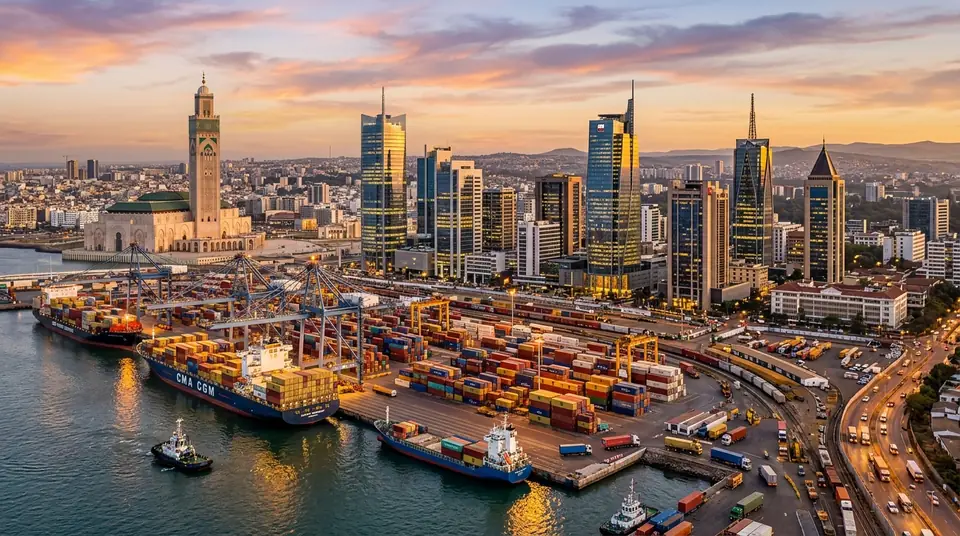
Finding an importer in Africa involves institutional networks, trade fairs and B2B platforms, followed by a check in official registers. This guide sets out the useful sources, the registers to consult by country and the ways to secure payment.
Key points
- Team France Export, operated by Business France with CCI France, Bpifrance and Régions de France, publishes business opportunities submitted by foreign companies (teamfrance-export.fr).
- The fourth Intra-African Trade Fair (IATF2025) was held in Algiers from 4 to 10 September 2025, organised by Afreximbank with the African Union Commission and the AfCFTA Secretariat (Ghana News Agency, 2025).
- In the 17 OHADA member states, the Trade and Personal Property Credit Register (RCCM) is governed by the Uniform Act on General Commercial Law adopted on 15 December 2010 in Lomé (ohada.org).
- In Nigeria, the Corporate Affairs Commission describes itself as the country's corporate registry and offers an online public search (cac.gov.ng).
- The ICC governs documentary credits through its Uniform Customs and Practice for Documentary Credits, 2007 Revision (UCP 600), which has 39 articles (ICC Academy, 2024).
Which African importer are you looking for?
The word importer covers very different profiles: a distributor buying to resell in a territory, a manufacturer importing its inputs, the buying office of a retail chain, or an import export company trading several products. Each buys in different quantities, with different lead times and document requirements.
Before prospecting, settle three things: the target country, the type of buyer and the channel (direct sale or exclusive distributor). An exclusive distributor will ask for a territory and terms; a manufacturer will mostly ask for specifications and reliable delivery.
The basics of import and export are in /blog/import-export-definition/, and preparing an export to the continent in /blog/exporter-en-afrique/. We do not repeat them here.
Finding importers in Africa through institutional networks
For a French company, the entry point is Team France Export. It is operated by Business France, with CCI France, Bpifrance and Régions de France as partners. It publishes "business opportunities", meaning searches for partners or suppliers submitted by foreign companies, as well as market information and export events. Its Diagnostic Business International lets you test a foreign market with support from Business France and funding from Bpifrance.
Business France states that it operates in France and in 53 other countries. Its teams abroad know the active importers in their sector and can arrange meetings: this is often faster than searching alone.
In African countries themselves, chambers of commerce and investment and export promotion agencies keep member lists and receive delegations. Send them a short profile: product, capacity, certifications, terms of sale. A precise request gets an answer more often than a simple request for a list.
Trade fairs and B2B platforms to meet African buyers
Trade fairs let you meet many African buyers in a few days. The fourth Intra-African Trade Fair (IATF2025) was held from 4 to 10 September 2025 at the Palais des Expositions in Algiers. Organised by Afreximbank with the African Union Commission and the AfCFTA Secretariat, it expected more than 2,000 exhibitors and more than 35,000 visitors from over 140 countries (Ghana News Agency, 2025).
National sector fairs are often more useful than a large general fair: visitors are professionals in your product. Prepare meetings in advance and record, for each contact, the company's legal name, country and registration number: you will need them for vetting.
B2B platforms complement these meetings. On SocoAfrica, you can browse the country directory (eight countries) and the requests for quotation posted by buyers on /rfq/. A platform gives you a first contact, not a guarantee: vetting still has to be done.
Vetting an African importer in official registers
In the 17 OHADA member states, the Uniform Act on General Commercial Law, adopted on 15 December 2010 in Lomé and in force since 15 May 2011, organises the Trade and Personal Property Credit Register (RCCM). The register is kept by the registry of the court with commercial jurisdiction or by the body designated by the State. It records the registration of traders, the activity declarations of entreprenants and the registration of security interests. Each national register feeds a regional file kept by the CCJA. The practical steps are detailed in /blog/rccm-verifier-entreprise-ohada/, and the list of member states in /blog/ohada-definition-pays-membres/.
In Morocco, a buyer is checked through its common company identifier (ICE) and its trade register entry: see /blog/ice-maroc-verifier-entreprise/ and /blog/registre-commerce-maroc-rc/.
In South Africa, the Companies and Intellectual Property Commission (CIPC) registers companies and co-operatives. Its website has a "Search Our Registry" section to look up a company, as well as online services (name search, disclosure certificates). In Nigeria, the Corporate Affairs Commission (CAC), established under the Companies and Allied Matters Act of 1990 and re-enacted in 2020, describes itself as the country's corporate registry and provides a public search at icrp.cac.gov.ng.
In every case, compare the legal name, address and status shown with what appears on the purchase order and on the buyer's bank account.
Warning signs before a first order
Some signs should make you slow down: a company that cannot be found in its country's register, a name that differs by one letter between documents, a free email address for a large order, a request for expensive samples with no cost sharing, or sudden urgency pushing you to ship before payment.
Ask for verifiable trade references: current suppliers, bank, usual forwarder. An established importer has them and shares them readily. A visit, or a meeting arranged by an institutional network, remains the safest check for a large contract.
Securing payment from an African buyer
For a first transaction, the documentary credit is the most protective tool. According to ICC Academy (2024), the ICC Uniform Customs and Practice for Documentary Credits, 2007 Revision, known as UCP 600, has 39 articles and is the latest version of rules first published in 1933. A documentary credit is a stand-alone payment undertaking, independent of the sales contract: the bank pays against compliant documents.
The ISBP 821 guide, published in July 2023 by the ICC Banking Commission, explains how banks examine these documents. It does not amend UCP 600. Badly prepared documents are the first cause of payment refusals: have the letter of credit reviewed before accepting its terms.
Once the relationship is established, a deposit followed by a balance against documents, or a guaranteed deferred payment, can replace the documentary credit. Also set the Incoterm and place of delivery in the contract (see /blog/incoterms-2020-guide/) and prepare the export documents (see /blog/formalites-export-documents/).
Finding African buyers with SocoAfrica
SocoAfrica lists manufacturers, co-operatives and exporters from eight African countries. Standard registration is free and makes you visible to buyers browsing the country directory.
Buyers post their needs free of charge on /rfq/: a direct way to spot importers already looking for your product. Before signing, you can request a company check on /verification/; the Verified and Premium tiers are quoted on request.
Frequently asked questions
- How do I find importers in Africa?
- Combine institutional networks (Team France Export, chambers of commerce, promotion agencies), sector or continental trade fairs such as the IATF, and B2B platforms. Then check each contact in its country's official register.
- How can I check that an African importer really exists?
- Consult its country's register: the RCCM in OHADA countries, the ICE and trade register in Morocco, the CIPC in South Africa, the CAC in Nigeria. Compare the legal name, address and status with its documents.
- What is an import export company?
- It is a company that buys goods in one country to sell them in another, on its own account or for clients. Our article /blog/import-export-definition/ explains how it works.
- How do I get paid by an African buyer?
- For a first order, prefer a documentary credit subject to ICC UCP 600: the bank pays against compliant documents. Once the relationship is established, a deposit and a balance against documents may be enough.
This guide summarises official texts as of the date shown. Rules change: check them with the body cited before any transaction.
Sources
- Team France Export — Succeed in your international development (2026)
- Business France — Overview (2026)
- Ghana News Agency — Algiers to host 2025 Intra-African Trade Fair (2025)
- OHADA — Uniform Act on General Commercial Law (in French) (2010)
- OHADA — Official website (member states, RCCM) (2026)
- Companies and Intellectual Property Commission (CIPC) — Official website (2026)
- Corporate Affairs Commission (CAC) Nigeria — Official website (2026)
- ICC Academy — Documentary credits: rules, guidelines and terminology (2024)
Looking for a supplier?
Post a request for quotation: our team forwards it to listed suppliers in the relevant sector.