Import-export: definition, players and steps to set up a company in France
SocoAfrica editorial team · Updated on
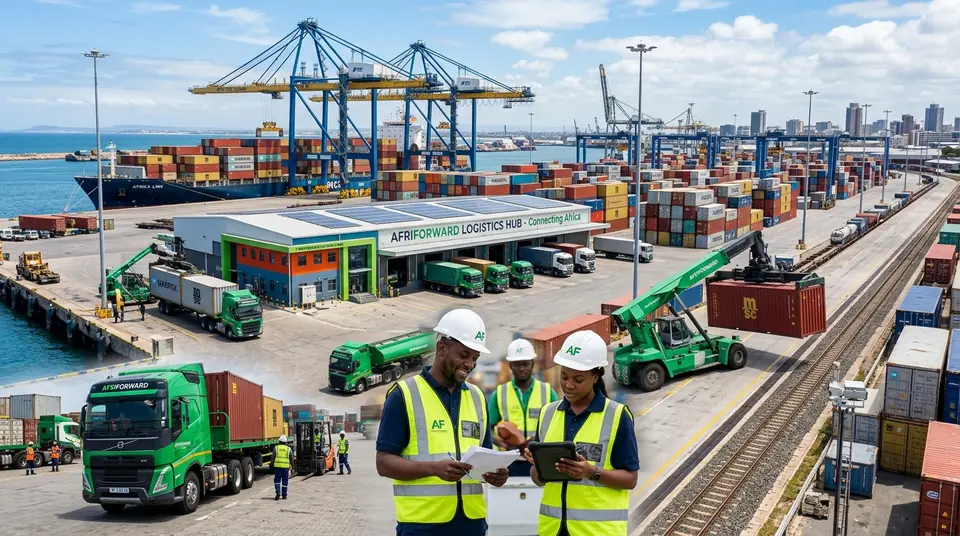
Import-export means buying goods abroad and selling goods outside their country of origin, together with the customs formalities that go with them. This guide defines the terms, presents the players and describes the official steps to set up an import-export company in France.
Key points
- According to douane.gouv.fr, EORI registration is mandatory before any customs operation in a European Union Member State.
- The EORI number is requested through the SOPRANO EORI online service, and French customs states that having an EORI number is free.
- Since 1 January 2023, company creation formalities in France have been carried out online on the business formalities portal (guichet des formalités des entreprises), according to entreprendre.service-public.fr.
- Since 1 January 2018, professionals acting as customs representatives must be registered as registered customs representatives (RDE).
Import-export: definition and difference between importing and exporting
Definition of importing: bringing into a country's customs territory goods produced or bought abroad. For a French company, buying cocoa in Côte d'Ivoire and having it delivered to France is an import. Importing or exporting is therefore the same transaction seen from either side of the border.
What does exporting mean? Exporting means selling and shipping goods to a buyer located outside the customs territory of departure. In the European Union, a sale to another Member State is not an export in the customs sense: it is called an intra-Community supply. Exporting, strictly speaking, concerns third countries.
Import-export covers both flows, importing and exporting, often within the same company. An import-export company can buy in one country to resell in another, with or without processing, and earns its margin on trading, logistics or distribution.
The players in importing and exporting
The importer buys the goods abroad and declares them on entry. As a rule, the importer is liable for import duties and taxes. The exporter sells the goods and completes the exit formalities, directly or through an agent.
The freight forwarder organises international transport: freight booking, consolidation, coordination between carriers, insurance. It does not necessarily carry out the customs formalities itself.
The customs broker, now called a registered customs representative (RDE) in France, carries out formalities on behalf of its client. French customs distinguishes direct representation, where the representative acts in the name and on behalf of the client, and indirect representation, where it acts in its own name but on behalf of the client. Since 1 January 2018, these professionals must be registered beforehand.
How to get started in import-export
Start with a specific product-country pair. Public statistics databases, such as the World Bank's WITS, show import and export flows by country and product and help identify existing demand.
Next, identify your product's customs code: it determines the applicable duties, the standards to meet and any tariff preferences. Prepare your terms of sale, with an Incoterm chosen from the eleven Incoterms 2020 rules described by the International Chamber of Commerce.
Finally, secure your partners. Check the legal existence of each supplier or buyer, ask for samples and start with modest volumes. How do you do import-export without excessive risk? By testing the full chain on a first operation before increasing quantities.
How to set up an import-export company in France
You first need to choose a legal form: sole proprietorship, or a company such as a SARL or SAS. The choice depends on the number of partners, the need to separate personal and business assets, and the manager's social security regime; a chartered accountant or lawyer can advise you.
According to entreprendre.service-public.fr, since 1 January 2023 the formalities for creating, modifying and closing a business must be completed online on the business formalities portal, which replaced the business formalities centres (CFE). It applies to all businesses, whatever their legal form or activity.
Once the company is registered, apply for your EORI number. According to the douane.gouv.fr page updated on 9 December 2025, EORI registration is mandatory before any customs operation in a Member State; the application goes through the SOPRANO EORI online service, and the number takes the form FR followed by the SIRET or SIREN.
French customs warns against websites that charge for this step: having an EORI number is free. If you export under preferential agreements, registered exporter (REX) status, requested on the SOPRANO platform, also requires an EORI number issued in France.
Import-export business: finding partners with SocoAfrica
For an import-export business focused on Africa, the SocoAfrica directory lists manufacturers, cooperatives and exporters in Morocco, Senegal, Côte d'Ivoire, Ghana, Nigeria, Cameroon, Kenya and South Africa.
Posting a request for quotation on /rfq/ is free. Before a first order, company verification (/verification/) lets you check the partner's legal identity; standard registration is free and the Verified and Premium levels are on quotation.
Frequently asked questions
- What is the difference between importing and exporting?
- Importing brings goods from abroad into a customs territory; exporting sends them out to a buyer located outside that territory. Import-export combines both activities.
- How do I set up an import-export company in France?
- Choose a legal form, complete the creation online on the business formalities portal, mandatory since 1 January 2023, then apply free of charge for your EORI number through SOPRANO EORI on douane.gouv.fr.
- Is there a fee for the EORI number?
- No. French customs states that having an EORI number is free and that websites charging for this step are fraudulent.
- Do I have to use a customs broker?
- It is not mandatory, but it is common. Since 1 January 2018, a professional who carries out formalities on behalf of others must be registered as a registered customs representative (RDE).
This guide summarises official texts as of the date shown. Rules change: check them with the body cited before any transaction.
Sources
- French Customs — The EORI number (2025)
- French Customs — EORI number application scams (2025)
- French Customs — The registered customs representative (2022)
- French Customs — Submitting a registered exporter (REX) application (2026)
- Service Public Entreprendre — Business formalities one-stop shop (2025)
- ICC — Incoterms 2020 (2020)
- World Bank, WITS — Sub-Saharan Africa Trade Summary 2023 (2023)
Looking for a supplier?
Post a request for quotation: our team forwards it to listed suppliers in the relevant sector.