Paying an African supplier safely: letters of credit, deposits, inspection and escrow
SocoAfrica editorial team · Updated on
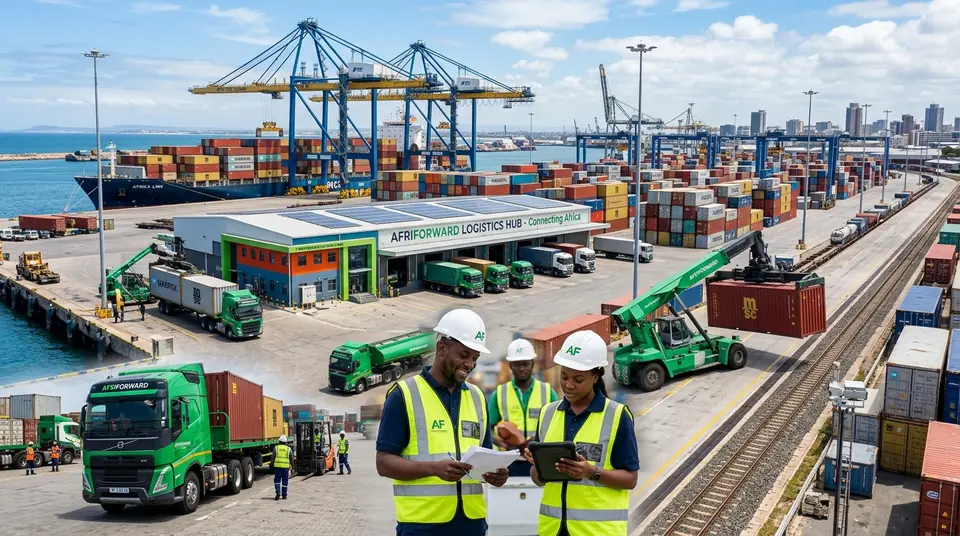
How to pay a supplier in Africa without losing your money or your goods: cash in advance, deposits, documentary collections, letters of credit and escrow compared, what pre-shipment inspection checks, and how to stop fake bank details fraud.
Key points
- The US International Trade Administration ranks cash in advance as the safest method for the seller and the least attractive for the buyer.
- A letter of credit, governed by the ICC's UCP 600, commits the buyer's bank to pay against complying documents, and the buyer owes nothing until the goods have shipped.
- Under a documentary collection (ICC Publication No. 522), banks swap documents for payment but do not guarantee payment.
- If a supplier emails new bank details, Cybermalveillance.gouv.fr advises calling them on their usual number before sending any transfer.
Paying an African supplier: the short answer
On a first order, don't wire the full amount up front. Tie payment to proof of shipment: a letter of credit for large orders, a documentary collection or a modest deposit with the balance against documents once you know the supplier, escrow for small orders. Have the goods inspected before they leave, and confirm any bank details by phone.
Expect to negotiate. Whatever protects the buyer exposes the seller, and vice versa. The International Trade Administration (ITA), the US government's trade agency, puts it bluntly: to an exporter, a sale is a gift until it is paid for; to an importer, a payment is a donation until the goods arrive. The right method splits that risk.
Payment methods, one by one
Cash in advance by wire transfer. The buyer pays all or a large share before shipment. The ITA calls it the most secure option for the seller and the least attractive for the buyer, who worries the goods may never be sent. Wires are also among the fastest options. Keep them for small orders or suppliers you have already tested.
Deposit, then balance against documents. A common hybrid: a deposit goes out with the order and the balance is paid against the shipping documents, for example through a documentary collection. Only the deposit is at risk. Spell out its amount, the balance due date and the document list in the contract.
Documentary collection. The seller's bank sends the documents to the buyer's bank, which releases them only against payment (documents against payment) or against an accepted draft (documents against acceptance). These deals run under the ICC Uniform Rules for Collections, Publication No. 522, which make clear that banks do not examine the documents. The ITA adds that banks do not guarantee payment and recommends collections only for established relationships in stable markets. They generally cost less than letters of credit.
Letter of credit. The buyer's bank commits to pay the seller once the required documents are presented and comply. The governing rules are the ICC's UCP 600. The ITA rates it among the most secure instruments, and it protects the buyer too: no payment is due until the goods have shipped as agreed. The downside: it takes work, bank fees make it relatively expensive, and the documents are prone to discrepancies. Our guide explains how it works (/blog/credit-documentaire-guide/).
Escrow. The buyer pays a trusted third party. Once the funds are verified, the seller ships. On delivery the buyer has an agreed window to inspect the goods, five days in the ITA's example, after which the funds go to the seller. The ITA advises checking that the escrow firm is properly licensed or accredited. Either party can pay the fee, or they can split it.
Open account and credit insurance. On open account, the goods are delivered before payment falls due, typically at 30, 60 or 90 days according to the ITA. It is the best case for the buyer and one of the riskiest for the seller. Sellers can cover it with export credit insurance, which protects against commercial risks such as buyer insolvency and certain political risks, but not against physical loss of or damage to the goods. An insured supplier finds it easier to offer you payment terms.
Comparison table: risk, cost and timing
Buyer risk means paying without receiving the right goods; seller risk means shipping without being paid. The order follows the ITA's payment risk diagram. Actual costs depend on banks and providers, so ask for quotes.
Cash in advance by wire — buyer risk: high; seller risk: none; cost: transfer fees (varies by bank or provider); timing: one of the fastest options (ITA).
Deposit plus balance against documents — buyer risk: limited to the deposit; seller risk: on the balance; cost: depends on how the balance is paid (varies by bank or provider); timing: shipment, then document handling (varies by bank or provider).
Documentary collection — buyer risk: low to medium, since payment is made against documents and the goods are not checked; seller risk: medium, with no bank guarantee; cost: generally lower than a letter of credit (ITA), amount (varies by bank or provider); timing: faster payment than a letter of credit, according to the ITA.
Letter of credit — buyer risk: low, payment only against complying documents; seller risk: low if the documents comply and the issuing bank is sound, lower still if the credit is confirmed; cost: relatively expensive because of bank fees (ITA), amount (varies by bank or provider); timing: issuance and document examination (varies by bank or provider).
Escrow — buyer risk: low, funds are released only after inspection; seller risk: low, funds are secured before shipment; cost: provider fee (varies by bank or provider); timing: agreed inspection period, five days in the ITA's example.
Open account with credit insurance — buyer risk: very low; seller risk: reduced by insurance, which covers 90 to 95% of short-term risk according to the ITA; cost: premium often built into the selling price (ITA), amount (varies by bank or provider); timing: agreed term, often 30 to 90 days.
Pre-shipment inspection: what it checks and who orders it
Letters of credit and collections pay against documents, not goods. Pre-shipment inspection fills that gap. The World Trade Organization (WTO) describes it as using private companies to check shipment details such as the price, quantity and quality of goods ordered overseas. According to the ITA, inspectors also check the exchange rate, financial terms and customs classification.
Case one: the importing country requires it. The exporter is told to contact the designated inspection company. The WTO Agreement on Preshipment Inspection sets the rules: according to the ITA, the exporter must receive, within five working days of the inspection, either a Clean Report of Findings or a written explanation of why one could not be issued. Article 10.5 of the WTO Trade Facilitation Agreement says members shall not require these inspections for tariff classification and customs valuation, immediately for developed members and on their own schedule for developing members.
Case two: the buyer orders it. Bureau Veritas notes that regulatory inspection is not a detailed technical check; a buyer who needs a full technical inspection orders it under a separate contract. Name the inspection body, the criteria, the date and who pays in your sales contract, and list the inspection certificate among the documents required under the letter of credit. Cost and lead time: to be requested from the inspection body.
Common scams and how to check a supplier
Fake bank details. Cybermalveillance.gouv.fr, the French government's cybercrime assistance service, describes the scheme: the fraudster impersonates a creditor, spots an upcoming or recurring payment and sends an invoice carrying the details of an account they control. It often follows a hacked mailbox, on the supplier's side or the buyer's. The FBI files these scams under business email compromise (BEC).
The defences are simple. Before paying into a new account, call the supplier on the number you already have, never the one in the message. The FBI's IC3 recommends verifying any change of account details through a second channel and checking the sender's exact address. If you have already paid, contact your bank at once to request a recall, keep the evidence and file a complaint.
Fake suppliers. Before paying, check that the company exists and that the bank account is in its name. In the OHADA zone, look it up in the trade and personal property credit register (/blog/rccm-verifier-entreprise-ohada/); in Morocco, use the common company identifier (/blog/ice-maroc-verifier-entreprise/). Settle who handles transport, risk and insurance with an Incoterm (/blog/incoterms-2020-guide/). On SocoAfrica, company verification (/verification/) helps you check a partner.
Frequently asked questions
- What is the safest way to pay an African supplier?
- For the buyer, letters of credit and escrow are among the most protective: payment depends on complying documents or on receiving the goods. Cash in advance by wire is the riskiest for the buyer. Add a pre-shipment inspection to check the goods themselves.
- What is the difference between a documentary collection and a letter of credit?
- In both, banks exchange documents for payment. Under a letter of credit, the buyer's bank commits to pay if the documents comply. Under a documentary collection, governed by ICC Publication No. 522, banks do not examine the documents and do not guarantee payment.
- Who orders and pays for pre-shipment inspection?
- If the importing country requires it, the exporter contacts the designated inspection company. Otherwise the buyer can order an inspection under contract with a body such as Bureau Veritas. Who pays is set in the sales contract; fees are to be requested from the inspection body.
- What should I do if my supplier emails new bank details?
- Don't pay. Call the supplier on their usual number to confirm the change. If you have already paid, alert your bank immediately to try to recall the funds, keep the messages and report it to the police.
This guide summarises official texts as of the date shown. Rules change: check them with the body cited before any transaction.
Sources
- International Trade Administration — Methods of Payment (2026)
- International Trade Administration — Cash-in-Advance (2026)
- International Trade Administration — Letter of Credit (2026)
- International Trade Administration — Documentary Collections (2026)
- International Trade Administration — Export Credit Insurance (2026)
- International Trade Administration — Trade Guide: WTO Agreement on Preshipment Inspection (2026)
- WTO — Preshipment Inspection (2026)
- ICC Academy — UCP 600 (Uniform Customs and Practice for Documentary Credits) (2007)
- ICC Academy — URC 522 (Uniform Rules for Collections) (1995)
- Bureau Veritas Verigates — Frequently asked questions on preshipment inspection (2026)
- Cybermalveillance.gouv.fr — What to do about transfer fraud and fake bank details (in French) (2026)
- FBI Internet Crime Complaint Center (IC3) — Business Email Compromise (2026)
Looking for a supplier?
Post a request for quotation: our team forwards it to listed suppliers in the relevant sector.