Incoterms 2020: the 11 ICC rules, the table of obligations and how to choose
SocoAfrica editorial team · Updated on
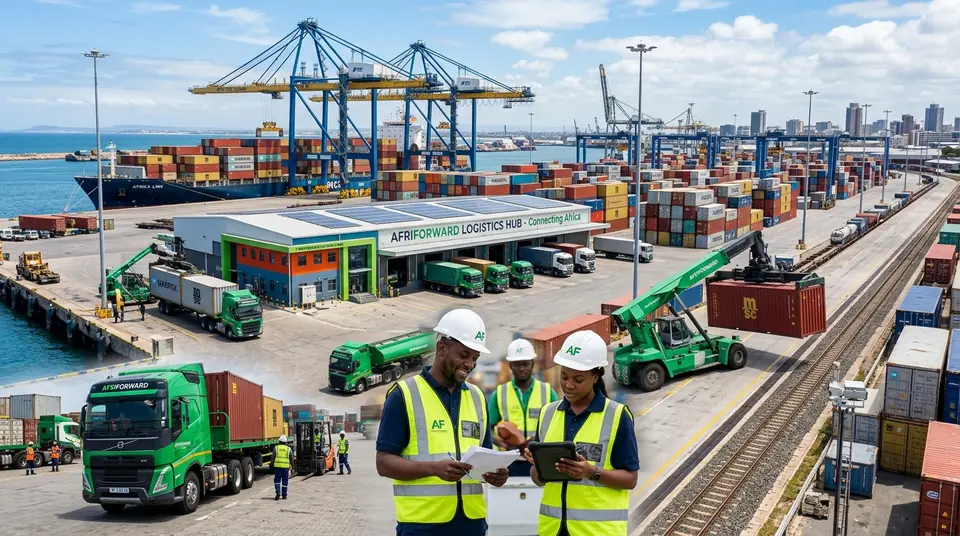
The Incoterms 2020 rules of the International Chamber of Commerce allocate transport, insurance, customs clearance and risk between seller and buyer. Here is the list of the eleven rules, what each one requires, the status of the revision announced by ICC and a method for choosing your Incoterm.
Key points
- Incoterms 2020 contains eleven rules: seven for any mode of transport and four reserved for sea and inland waterway transport (douane.gouv.fr).
- The applicable version is Incoterms 2020, in force since 1 January 2020; according to French customs, a name such as ‘Incoterm 2024’ is not official.
- Since 2020, CIP requires insurance compliant with Institute Cargo Clauses (A), while CIF keeps Clauses (C) as the default (ICC).
- ICC's 2026 workplan sets the goal of beginning the revision of the rules, laying the groundwork for Incoterms 2030.
What are Incoterms? Definition
Incoterms (International Commercial Terms) are rules published by the International Chamber of Commerce (ICC). According to ICC Academy (2026), ICC created them in 1936 and updates them periodically, the latest edition being Incoterms 2020. They standardise the terms of business-to-business sales of goods and clarify, among other things, the place of delivery and the moment when the risk of loss or damage passes from seller to buyer.
French customs gives a similar definition: a codified set of standard rules that set out the obligations of seller and buyer, the allocation of transport costs and the point of risk transfer. Each rule is written as a three-letter code followed by a named place. An Incoterm without a place is incomplete: ‘FCA’ says nothing, while ‘FCA Casablanca, Incoterms 2020’ fixes the point of delivery.
List of Incoterms 2020: two families of rules
Which Incoterms are in force? Incoterms 2020 contains eleven rules in two families (douane.gouv.fr). Seven rules apply to any mode of transport, including multimodal transport: EXW (Ex Works), FCA (Free Carrier), CPT (Carriage Paid To), CIP (Carriage and Insurance Paid To), DAP (Delivered at Place), DPU (Delivered at Place Unloaded) and DDP (Delivered Duty Paid).
Four rules are reserved for sea and inland waterway transport: FAS (Free Alongside Ship), FOB (Free on Board), CFR (Cost and Freight) and CIF (Cost, Insurance and Freight). French customs specifies that they target bulk and conventional shipping. These are the maritime Incoterms in the strict sense.
Incoterms table: the seven rules for any mode of transport
EXW: the seller makes the goods available at its premises without loading them; the buyer pays for transport, bears the risk from that moment and carries out export as well as import formalities (ICC Academy, 2025; douane.gouv.fr). FCA: the seller hands the goods to the carrier nominated by the buyer, at its premises or at another agreed place, and carries out export clearance; the buyer pays for main carriage and risk passes on delivery (ICC Academy, 2025).
CPT and CIP: the seller arranges and pays for carriage to the agreed place of destination, but risk passes to the buyer at the time and place of delivery in the seller's country (ICC, 2024 guide). CIP adds insurance paid by the seller, which since 2020 must comply with Institute Cargo Clauses (A) or similar clauses (ICC).
DAP, DPU and DDP: the seller pays for carriage and bears the risk up to the agreed place of destination (ICC Academy, 2026). Under DAP, goods are delivered ready for unloading; under DPU, they are delivered unloaded. Under these two rules the buyer carries out import formalities; under DDP the seller also does so. Under the D rules the seller has no obligation to insure the goods for the buyer.
Maritime Incoterms: FAS, FOB, CFR and CIF
FAS: goods are delivered alongside the vessel; FOB: they are handed over on board the vessel (ICC, 2024 guide). Under both rules the buyer arranges and pays for main sea carriage, and the seller carries out export formalities.
CFR and CIF: the seller pays freight to the port of destination, but risk passes to the buyer once the goods are on board at departure. Under CIF the seller also takes out insurance whose default cover remains Institute Cargo Clauses (C), with the parties free to agree on a higher level (ICC).
ICC's selection flowchart reserves these rules for traditional goods lifted on board a ship. For containerised or multimodal shipments, or delivery to a terminal, it points to CPT or CIP rather than CFR or CIF (ICC, 2024 guide). A container of spare parts leaving Le Havre for Abidjan therefore normally falls under the any-mode rules. FOB, CFR, CIF, CPT, CIP and DDP are covered in separate guides on this blog.
What changed in 2020, and the question of Incoterms 2025
According to ICC, the 2020 edition introduced several changes: FCA allows a bill of lading with an on-board notation (articles A6/B6); the costs of each rule are grouped in article A9/B9; CIP requires higher insurance cover than CIF; security appears in articles A4 and A7; the former DAT rule became DPU and now comes after DAP.
Are there Incoterms 2025? No. According to French customs, the applicable version is Incoterms 2020, and a name such as ‘Incoterm 2024’ is not official.
A revision is nevertheless being prepared. In its 2026 workplan, ICC set itself the goal of beginning work on the revision of the Incoterms rules, laying the groundwork for Incoterms 2030. On the official pages consulted, ICC has published neither a new text nor an application date: contracts signed today should refer to Incoterms 2020.
Which Incoterm should you choose to export or import?
How do you choose an Incoterm? ICC's flowchart (2024) starts with one question: do you want to include the cost of main international transport in your price? If yes, you choose between a C rule and a D rule. Under a C rule, risk passes to the buyer at shipment in your country; under a D rule, you remain responsible until arrival. If no, you choose among EXW, FCA, FAS and FOB depending on where you hand over the goods.
The flowchart then asks practical questions: can you carry out export formalities? Can you obtain import licences and recover import VAT in the destination country? Can you unload the goods on arrival? A no to the second question rules out DDP; a yes to the third opens up DPU.
Also think about customs in the country of arrival. For imports into the European Union, customs value is assessed at the first point of entry into the Union's customs territory, and transport and insurance costs borne by the buyer up to that point are added to the price (article 71 of the Union Customs Code, cited by douane.gouv.fr). The named place of the Incoterm therefore determines which costs must be declared.
Two examples. An Ivorian cooperative selling to a European coffee roaster without mastering sea freight is better served by a rule where the buyer arranges main carriage, such as FCA. A European manufacturer that wants to control shipping all the way to Douala without handling Cameroonian customs itself will look at DAP or DPU rather than DDP.
Securing your trade with Africa
The Incoterm allocates obligations; it does not tell you whether your partner can fulfil them. Before entrusting a supplier with export clearance or transport, check that the company exists and review its references. SocoAfrica offers company verification (/verification/) and a country directory covering Morocco, Senegal, Côte d'Ivoire, Ghana, Nigeria, Cameroon, Kenya and South Africa.
Looking for a supplier and want to set the Incoterm from the outset? Posting a request for quotation (/rfq/) is free: state the rule you want and the named place, for example ‘FCA Casablanca, Incoterms 2020’, to receive offers you can compare with one another.
Frequently asked questions
- Which Incoterms are currently in force?
- The eleven ICC Incoterms 2020 rules, in force since 1 January 2020: EXW, FCA, CPT, CIP, DAP, DPU and DDP for any mode of transport, and FAS, FOB, CFR and CIF for sea and inland waterway transport.
- Do Incoterms 2025 exist?
- No. The applicable version remains Incoterms 2020. ICC has only included the start of the revision, with a view to Incoterms 2030, in its 2026 workplan.
- Which Incoterm should I choose to export?
- It depends on the transport you want to pay for and the formalities you can carry out. If the buyer arranges transport, FCA is often preferable to EXW, because the seller keeps control of export clearance.
- Should you write incoterm, incoterme or incotermes?
- The official name is the ICC trademark Incoterms®. French texts also use the spellings “incoterme” and “incotermes” (incoterme 2020, définition des incotermes): they refer to the same Incoterms 2020 rules.
This guide summarises official texts as of the date shown. Rules change: check them with the body cited before any transaction.
Sources
- ICC — Incoterms® 2020 (rules and main changes) (2026)
- ICC — Global Policy Commissions Workplan 2026 (2026)
- ICC — Incoterms® 2020 Checklist and Flowcharts (2024 update) (2024)
- ICC Academy — Incoterms® 2020 C rules vs D rules: Risk transfer explained (2026)
- ICC Academy — FCA & EXW Incoterms® 2020 explained: Key differences (2025)
- French Customs — The new Incoterms® 2020 rules and customs value (accessed in 2026) (2026)
Looking for a supplier?
Post a request for quotation: our team forwards it to listed suppliers in the relevant sector.