FCA Incoterm (Free Carrier): delivery, on-board bill of lading and difference with EXW
SocoAfrica editorial team · Updated on
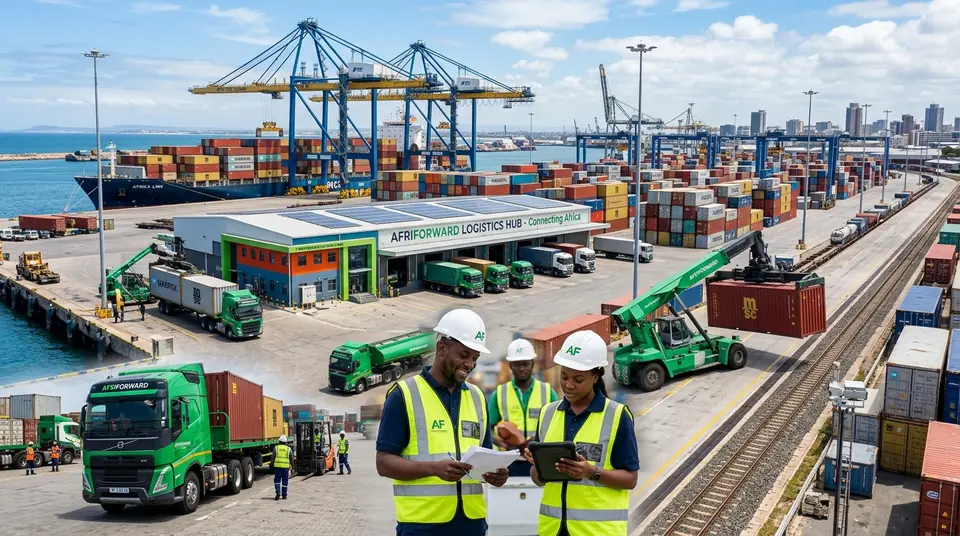
The FCA Incoterm requires the seller to hand the goods, cleared for export, to the carrier chosen by the buyer. The place of handover changes who loads and who unloads, and the 2020 edition added an on-board bill of lading option useful for payments by documentary credit.
Key points
- Under FCA, the seller delivers to the carrier or person nominated by the buyer and carries out export clearance, whatever the place of delivery (ICC Academy, 2025).
- When delivered at the seller's premises, the goods are loaded by the seller onto the buyer's vehicle; when delivered elsewhere, they are handed over ready for unloading (ICC Academy, 2025).
- Since 2020, articles A6/B6 of FCA allow the parties to agree that the buyer will have a bill of lading with an on-board notation issued to the seller (ICC).
- French customs states that ICC recommends using FCA rather than EXW for international trade.
FCA Incoterm: definition
FCA stands for Free Carrier (sometimes spelled ‘incoterme FCA’ in French). It is one of the seven Incoterms 2020 rules that can be used with any mode of transport (douane.gouv.fr). The seller delivers the goods to the carrier or person nominated by the buyer, at the agreed place, and carries out export clearance (ICC Academy, 2025).
The buyer then arranges and pays for main carriage and handles any import formalities. French customs sums it up: under FCA, the buyer takes on most of the transport, and the seller carries out export formalities.
ICC's selection flowchart (2024) points to FCA when the seller does not pay for main carriage and the goods are shipped in a container, or by air, rail or road. It is therefore a rule suited to departure sales on containerised flows, such as shipments of processed goods from Morocco or Senegal to Europe.
Delivery at the seller's premises or at another place
FCA has two delivery scenarios (ICC Academy, 2025). If the agreed place is the seller's site, the seller loads the goods onto the vehicle sent by the buyer, and risk passes to the buyer at that moment.
If the agreed place is somewhere else, for example an airport, a railway station or a port terminal, the seller delivers the goods there to the carrier or person nominated by the buyer, ready for unloading from the vehicle that brought them. In both cases the seller remains responsible for export formalities.
Two examples. An argan oil cooperative with its own loading bay can sell ‘FCA’ with its address as the named place: it loads the truck of the buyer's freight forwarder. An exporter that prefers to bring its pallets to the terminal of its port of shipment will name that terminal: its obligation ends at handover, with the goods ready for unloading.
The on-board bill of lading: the option added in 2020
ICC revised FCA for a specific case: an FCA sale with sea carriage in which the seller, the buyer or either party's bank requests a bill of lading with an on-board notation. Articles A6/B6 now allow the parties to agree that the buyer will instruct the carrier to issue that bill of lading to the seller once the goods are loaded, and that the seller will then tender it to the buyer, often through the banks (ICC).
French customs specifies that this option was added to meet the requirements of documentary credits. Without it, an FCA seller delivering before loading on board could struggle to present the required document to its bank.
In practice, if your African or European customer pays by a documentary credit requiring an on-board bill of lading, write this option clearly into the sales contract and check that the terms of the credit refer to it.
Transfer of risk and costs under FCA
Risk passes to the buyer at delivery, depending on the agreed place: on loading onto its vehicle at the seller's premises, or when the goods are placed at the carrier's disposal at the other place (ICC Academy, 2025). Anything that happens afterwards during main carriage is the buyer's concern.
Since 2020, all costs associated with each rule are grouped in article A9/B9, giving an at-a-glance list of the costs expected from each party (ICC). The seller must also comply with transport security requirements, set out in articles A4 and A7.
On the import side in the European Union, customs value is assessed at the first point of entry into the Union, and transport and insurance costs borne by the buyer up to that point are added to the price paid (article 71 of the Union Customs Code, cited by douane.gouv.fr). Under FCA, the European buyer will therefore declare the freight it paid from the African place of delivery.
FCA or EXW: what is the difference?
Under EXW, the seller makes the goods available at its premises without loading them, and the buyer carries out export clearance (ICC Academy, 2025). Under FCA, the seller loads at its premises or delivers at the agreed place, and clears the goods for export. That is the essential difference between the two rules.
ICC Academy strongly recommends considering FCA rather than EXW whenever goods cross a border, because of the complications of leaving export formalities to the buyer. French customs echoes this position: ICC recommends reserving EXW for domestic or regional trade and favouring FCA.
For an African exporter, FCA has a concrete advantage: it keeps control of its own export declaration instead of depending on a foreign buyer for a formality performed in its own country. The guide devoted to EXW details these limits.
Finding a supplier ready to deliver FCA
Selling FCA assumes the supplier can clear goods for export and, where relevant, load the buyer's vehicle. Before ordering, check that it has the means to do so and that it is indeed the entity that will appear on the documents.
SocoAfrica lists manufacturers, cooperatives and exporters from eight African countries, offers company verification (/verification/) and lets you post a free request for quotation (/rfq/) stating ‘FCA’ and the delivery place you want.
Frequently asked questions
- What does FCA mean as an Incoterm?
- FCA stands for Free Carrier. The seller hands the goods, cleared for export, to the carrier nominated by the buyer at the agreed place; the buyer then pays for main carriage.
- Who loads the goods under FCA?
- If delivery takes place at the seller's premises, the seller loads the buyer's vehicle. If it takes place elsewhere, the seller delivers the goods ready for unloading from its own vehicle.
- Can FCA be used for sea transport?
- Yes. FCA can be used with any mode of transport, and since 2020 the parties can agree that a bill of lading with an on-board notation will be issued to the seller.
- FCA or EXW: which should I choose to export?
- For a sale that crosses a border, ICC recommends considering FCA rather than EXW, because the seller then carries out export clearance itself.
This guide summarises official texts as of the date shown. Rules change: check them with the body cited before any transaction.
Sources
- ICC Academy — FCA & EXW Incoterms® 2020 explained: Key differences (2025)
- ICC — Incoterms® 2020 (FCA revision, articles A6/B6 and A9/B9) (2026)
- ICC — Incoterms® 2020 Checklist and Flowcharts (2024 update) (2024)
- French Customs — The new Incoterms® 2020 rules and customs value (accessed in 2026) (2026)
Looking for a supplier?
Post a request for quotation: our team forwards it to listed suppliers in the relevant sector.