AfCFTA: definition, objectives and how Africa's free trade area works
SocoAfrica editorial team · Updated on
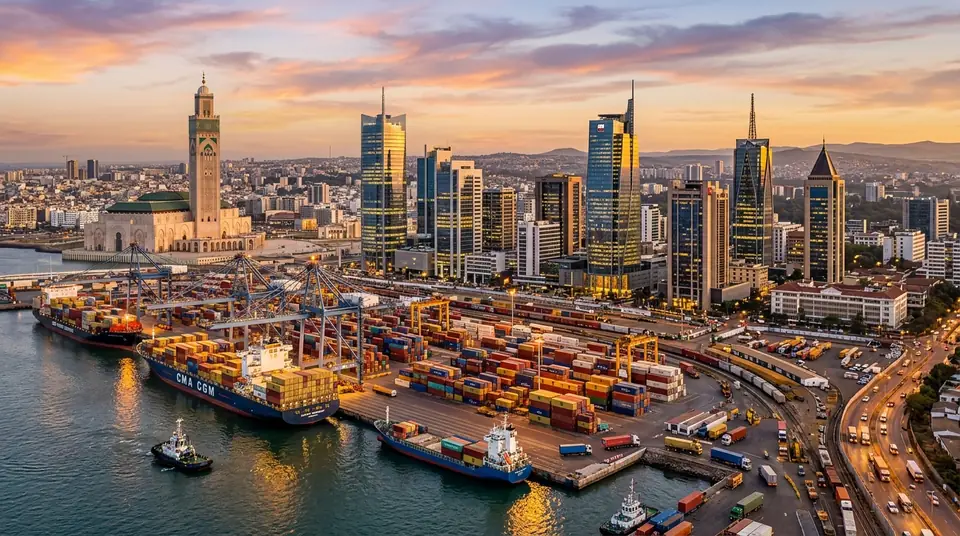
The AfCFTA, or African Continental Free Trade Area, is the agreement that aims to bring the continent's markets together into a single trading space. Here is its definition, its key dates, its protocols and what it actually changes for a small business exporting within Africa.
Key points
- The Agreement Establishing the AfCFTA was adopted on 21 March 2018 in Kigali, at the 10th Extraordinary Session of the African Union Assembly (official AU status list, 2026).
- It entered into force on 30 May 2019, and trading under the AfCFTA regime began on 1 January 2021 (AfCFTA Secretariat).
- The AfCFTA Secretariat is based in Accra, Ghana (AfCFTA Secretariat).
- According to the AU list of 22 May 2026, 54 States have signed the agreement and 49 have deposited their instrument of ratification.
- The Guided Trade Initiative was launched on 7 October 2022 in Accra with eight countries to test the first real trades (Africa Renewal, UN, 2022).
What is the AfCFTA? A simple definition
The AfCFTA is a free trade area at the scale of Africa. In practice, participating States undertake to progressively remove customs duties and non-tariff barriers on goods originating in other State Parties, and to gradually open their services markets. The agreement is carried by the African Union and is one of the flagship projects of its Agenda 2063.
It is not a customs union: each country keeps its own tariff towards the rest of the world. The preference only applies between State Parties, and only to products that meet the agreement's rules of origin. We cover those rules in our dedicated article, /blog/navigating-afcfta-rules-of-origin/, so we do not repeat them here.
The AfCFTA does not replace regional economic communities such as ECOWAS, the EAC or SADC. The progress report presented to the African Union in July 2025 describes them as the building blocks of the continental agreement, whose instruments must remain complementary.
Creation and entry into force of the AfCFTA: key dates
The agreement was adopted on 21 March 2018 in Kigali, Rwanda, at the 10th Extraordinary Session of the African Union Assembly. According to the AfCFTA Secretariat, 44 of the 55 AU Member States signed it that day.
Article 23 of the agreement provides for entry into force thirty days after the 22nd instrument of ratification is deposited with the Chairperson of the AU Commission. According to tralac, the agreement entered into force on 30 May 2019 for the 24 countries that had deposited their instrument by then.
Trading under the AfCFTA regime started on 1 January 2021. The Moroccan customs circular of January 2024 notes that the base tariff is the one in force on 30 May 2019, that tariff dismantling starts on 1 January 2021 and that each tranche applies on 1 January of each year.
The objectives of the AfCFTA
According to its Secretariat, the AfCFTA aims to create a single continental market of 1.3 billion people, with a combined GDP of 3.4 trillion US dollars. Its mandate is to eliminate trade barriers and boost intra-African trade.
The Secretariat also lists other objectives: developing trade in value-added production across all services sectors, building regional value chains that attract investment and create jobs, and fostering industrialisation to make Africa more competitive over the medium to long term.
For goods, the schedule rests on three national lists. List A covers 90% of tariff lines, liberalised over 5 years for developing countries and over 10 years for least developed countries. List B groups 7% of sensitive products, over 10 and 13 years. List C, 3% of lines, stays outside liberalisation (Moroccan customs circular, 2024).
A framework agreement completed by protocols
The AfCFTA agreement is a framework agreement: the detailed rules sit in protocols. According to tralac (2025), the protocols on trade in goods, on trade in services and on dispute settlement entered into force with the agreement, on 30 May 2019.
The protocols on investment, on intellectual property rights and on competition policy were adopted by the AU Assembly at its 36th ordinary session, on 18 and 19 February 2023. The protocols on digital trade and on women and youth in trade followed in February 2024, and the eight annexes to the digital trade protocol were adopted in February 2025.
Tralac notes, however, that ratification of these phase two protocols had not yet begun at the time of its May 2025 update. A business therefore needs to distinguish the rules already applicable, especially those on goods, from those still being put in place.
The Guided Trade Initiative
The Guided Trade Initiative was launched on 7 October 2022 in Accra. According to Africa Renewal, the United Nations magazine, eight countries took part at the start: Cameroon, Egypt, Ghana, Kenya, Mauritius, Rwanda, Tanzania and Tunisia, with at least 96 products.
Its purpose is to enable commercially meaningful trade and to test the operational, institutional, legal and trade policy environment of the AfCFTA. The Secretariat adds that it also helps assess private sector readiness and gather feedback on national systems.
The Secretariat states that AfCFTA Trading Companies act as aggregators for businesses, and that African commodity exchanges have formed an association to share information.
AfCFTA advantages and drawbacks for a small business
On the plus side, the tariff preference can lower the cost of entering an African market. Proof of origin is relatively accessible: according to Moroccan customs (2024), in addition to the certificate of origin, an invoice declaration can be made out by any exporter when the consignment value does not exceed 5,000 US dollars. A proof of origin remains valid for twelve months, and the agreement provides for cumulation of origin between State Parties.
On the downside, implementation is still partial. According to the July 2025 progress report, of 48 adopted tariff offers, 24 countries had notified the domestication and gazetting that allow them to trade under the AfCFTA regime. Rules of origin were agreed for 92.43% of tariff lines, with textiles and automotive still under negotiation.
Another limit: the preference only exists if both countries have completed their procedures and the product appears in their lists. Before basing a price offer on an AfCFTA rate, check it with the customs of the importing country.
Preparing your trade with SocoAfrica
Before exporting under the AfCFTA regime, check three things: has the destination country ratified the agreement and published its concessions, does your product appear in its List A, and can you prove its origin?
On SocoAfrica, you can find manufacturers and exporters by country in the directory, request verification of a partner company and post a request for quotation free of charge to receive offers from African suppliers. Standard registration is free; the Verified and Premium tiers are quoted on request.
Frequently asked questions
- What is the AfCFTA?
- It is the African Continental Free Trade Area, created by an agreement adopted in Kigali on 21 March 2018. It provides for the progressive removal of customs duties and non-tariff barriers between the African States that have ratified it.
- When did the AfCFTA enter into force?
- The agreement entered into force on 30 May 2019. Trading under its regime began on 1 January 2021.
- Where is the AfCFTA headquarters?
- The AfCFTA Secretariat is based in Accra, Ghana.
- What are the objectives of the AfCFTA?
- To create a single continental market, eliminate trade barriers, boost intra-African trade, build regional value chains and support the continent's industrialisation, according to its Secretariat.
This guide summarises official texts as of the date shown. Rules change: check them with the body cited before any transaction.
Sources
- African Union — List of countries that have signed and ratified the Agreement establishing the AfCFTA (22/05/2026) (2026)
- AfCFTA Secretariat — About the AfCFTA (2026)
- AfCFTA Secretariat — Guided Trade Initiative (2026)
- tralac — AfCFTA: Questions and answers (2025)
- tralac — AfCFTA key features (status of ratification) (2026)
- African Union — Progress report on the implementation of the AfCFTA, 7th Mid-Year Coordination Meeting, Malabo (2025)
- Afrique Renouveau (ONU) — AfCFTA's Guided Trade Initiative takes off (2022)
- ADII Morocco — Circular No. 6530/223, customs implementation of the AfCFTA (Q1 2024 compilation) (in French) (2024)
Looking for a supplier?
Post a request for quotation: our team forwards it to listed suppliers in the relevant sector.