ITAC permit and import duty: how to import into or export from South Africa
SocoAfrica editorial team · Updated on
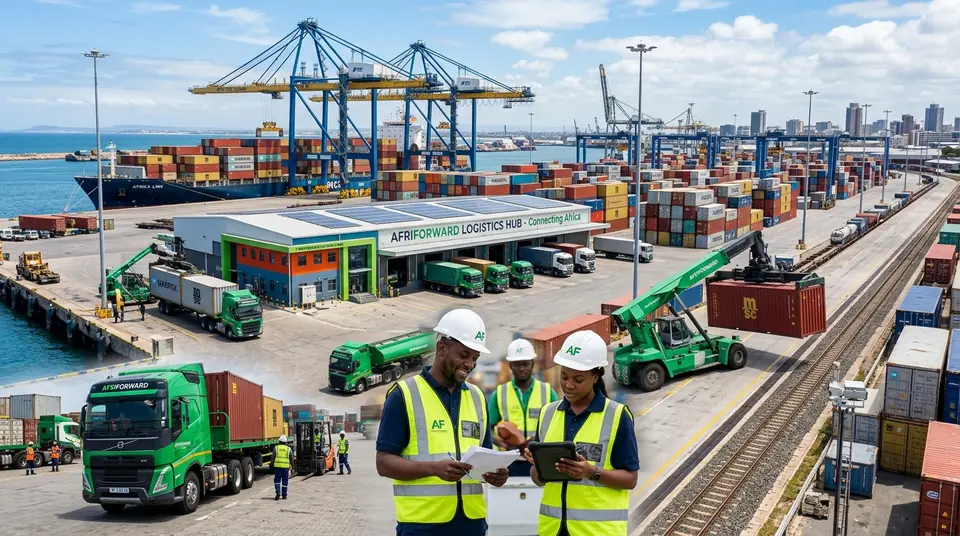
In South Africa, an ITAC permit is only required for controlled goods, including all used goods, while customs registration is handled by SARS. Here is how to check whether your product is affected, apply for a permit, read the customs tariff and estimate import VAT.
Key points
- ITAC requires an import permit for all used or second-hand goods; according to its Import Control page, 276 tariff lines are under import control.
- The average turnaround for an import permit application is three to five working days, and two working days for an export permit.
- Importer and exporter codes are handled by SARS: register online through the RLA service on eFiling, or with the DA 185 form and its annexure 4A1 (importer) or 4A2 (exporter).
- Customs duties are set in Schedule 1, Part 1 of the Customs and Excise Act; on 16 October 2026 the general duty on newsprint went from free to 5% following ITAC Report 784.
- Import VAT, charged at 15% since 1 April 2018, is calculated on the customs value plus duties plus 10% of the customs value.
Do you need an ITAC permit to import into South Africa?
Not for every product. The International Trade Administration Commission (ITAC) only requires a permit for goods under import control. All used or second-hand goods are covered; for new goods, it depends on the tariff line.
The new goods listed by ITAC include radioactive chemical elements, new pneumatic tyres, chemicals listed in the 1988 Convention, gambling devices, fossil fuels, and arms and ammunition. On the used side, the page covers electronic and medical equipment, aircraft, and waste and scrap among others. ITAC states that 276 tariff lines are under import control.
These controls rest on the International Trade Administration Act 71 of 2002 and the Customs and Excise Act 91 of 1964. The practical rule for an importer: identify the exact tariff code of the product first, then check whether it appears on ITAC's regulatory list before anything ships.
ITAC permit application: forms and turnaround, for imports and exports
Import forms are published on ITAC's Application Forms page: IE230 to register as an importer, IE461 for a commercial import permit, IE462 for a used passenger vehicle, IE463 for goods for personal use and IE464 for chemicals. Applications are emailed to the officials on the contact list or delivered to the ITAC office.
ITAC gives an average turnaround of three to five working days. It takes longer when the application needs supporting documents from other departments. The pages consulted do not mention application fees.
For exports, ITAC controls ferrous and non-ferrous waste and scrap, used motor vehicles and certain precious stones such as tiger's eye, among other goods. New applicants submit forms IE 230 and IE 363; existing exporters send an updated IE 363. The average turnaround is two working days, but scrap metal permits go through ten working days of circulation before processing. ITAC notes that rejections often occur when the business has no presence in South Africa, with no tax number or registration number.
Exporting from South Africa or importing: registering with SARS Customs
An ITAC permit does not replace customs registration. SARS asks businesses that want to register as an importer to capture their details on the RLA eFiling platform; when they do, there is no need to complete the DA 185 form. The paper route remains available with the DA 185 and its annexure 4A1 for an importer or 4A2 for an exporter.
The SARS page also offers a "Request my Customs Code" option, and applications for a customs client number can be made in person at the customs branch offices listed by city. It states that a clearing agent cannot represent foreign entities, and refers foreign principals to their nearest customs branch.
To export under the African Continental Free Trade Area (AfCFTA), SARS requires the business to be registered as an exporter or producer before it trades. A foreign buyer should ask its South African supplier for its exporter code early in the negotiation.
Customs duty in South Africa: where to read the tariff, and the role of SACU
Customs duties are set in Schedule 1, Part 1 of the Customs and Excise Act, published by SARS. Rates change: the SARS 2026 tariff amendments page shows that the general duty on newsprint in rolls or sheets went from free to 5% on 16 October 2026 (ITAC Report 784), and that the duty on sugar was cut from 697.92 to 516.35 cents per kilogram on 13 November 2026 under the variable tariff formula.
South Africa belongs to the Southern African Customs Union (SACU), together with Botswana, Eswatini, Lesotho and Namibia. According to SACU, the 2002 Agreement provides for free movement of goods between Member States, a common external tariff on imports from third parties, sharing of customs and excise revenue, and harmonised customs policies. The common revenue pool account is held by South Africa.
Before costing an import, check the rate in force on the date of arrival, not the one in an old quote. The tariff code used must be the same on the commercial invoice, the customs declaration and, where relevant, the ITAC permit application.
Import VAT and arrival through the port of Durban
SARS calculates import VAT on an Added Tax Value (ATV) equal to the customs value, plus any duty levied, plus 10% of the customs value. The rate has been 15% since 1 April 2018. Example: for a customs value of R200,000 and no duty, the ATV is R220,000 and VAT is R33,000. The 10% does not apply to goods originating in Botswana, Eswatini, Lesotho or Namibia and imported from those countries.
For containers, Durban is the main gateway. Transnet describes the Durban Container Terminal as Africa's biggest and busiest container terminal, handling 65% of the country's container volumes, and as a hub serving the Indian Ocean islands, the Middle East, the Far East and Australia.
Checking a South African partner with SocoAfrica
On SocoAfrica, the South Africa directory lists South African companies by sector. The company verification service (/verification/) checks the information a company declares, including its legal identifiers, before a badge visible to buyers is granted.
To find a supplier or a freight forwarder, posting a request for quotation on /rfq/ is free. Then ask each candidate for its registration number, its SARS customs code and, if the goods are controlled, a copy of its ITAC permit.
Frequently asked questions
- What is an ITAC permit?
- It is the authorisation issued by the International Trade Administration Commission to import or export controlled goods. It is required for all imported used or second-hand goods and for certain tariff lines of new goods; 276 tariff lines are under import control.
- How long does an ITAC permit take?
- On average three to five working days for an import permit and two working days for an export permit, according to ITAC. Scrap metal export permits need ten working days of circulation before processing.
- How is import VAT calculated in South Africa?
- SARS charges 15% on the customs value plus customs duty plus 10% of the customs value. The 10% uplift does not apply to goods originating in Botswana, Eswatini, Lesotho or Namibia and imported from those countries.
- Do I need a SARS customs code to import or export?
- Yes, for commercial trade: importer and exporter codes are administered by SARS. You register online through RLA on eFiling, or with the DA 185 form and its annexure 4A1 (importer) or 4A2 (exporter).
This guide summarises official texts as of the date shown. Rules change: check them with the body cited before any transaction.
Sources
- ITAC — Import Control (2026)
- ITAC — Import permit application forms (2026)
- ITAC — Export Control (2026)
- SARS — Customs registration, licensing and accreditation (2026)
- SARS — Tariff amendments 2026 (Schedule 1, Part 1) (2026)
- SARS — FAQ: How is VAT calculated on imported goods? (2025)
- SACU — Factsheet: Understanding the SACU revenue sharing arrangement (2021)
- Transnet — Durban Container Terminal (2026)
Looking for a supplier?
Post a request for quotation: our team forwards it to listed suppliers in the relevant sector.