Importing into Cameroon: customs, the GUCE single window and the port of Douala
SocoAfrica editorial team · Updated on
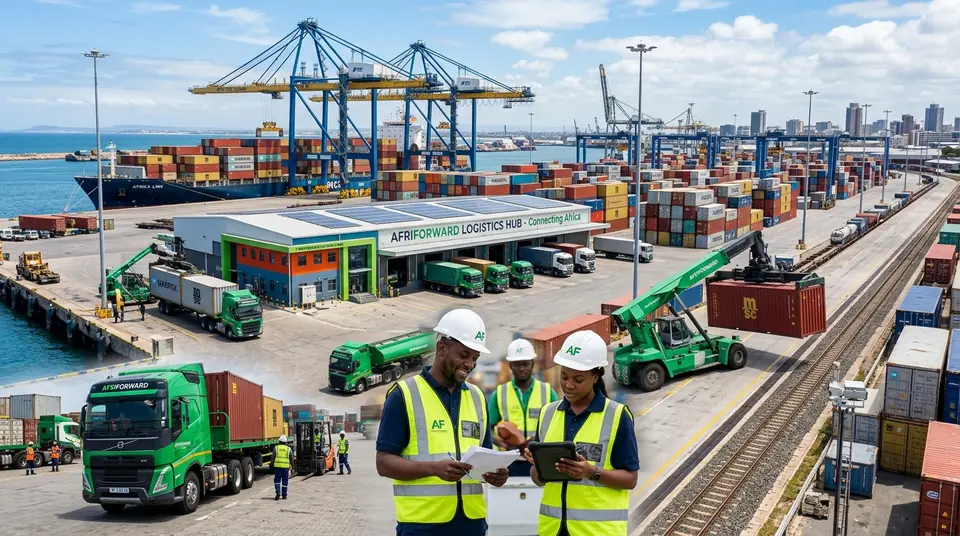
Importing into Cameroon involves three players: the Directorate General of Customs, the Single Window for Foreign Trade Operations (GUCE) and the port of Douala-Bonabéri. Here are the prior formalities, the CEMAC common external tariff and the customs clearance steps, as official sources describe them.
Key points
- Among the formalities common to all goods, customs lists the taxpayer card (NIU), registration on the Ministry of Trade's importers file and the import declaration (DI), required from an FOB value of 1,000,000 FCFA.
- The CEMAC common external tariff has four bands: 5% for essential goods, 10% for raw materials and capital goods, 20% for intermediate goods and 30% for consumer goods.
- On the GUCE platform, the single e-Force form covers, for imports, prior authorisation, pre-clearance, arrival formalities, clearance and release of goods.
- The electronic manifest must be uploaded at least 48 hours before the vessel arrives, and unloaded containers are scanned before being placed on the terminal.
- The declaration entered in CAMCIS by a licensed customs broker is routed to one of four control channels: green, blue, yellow or red.
How do you import into Cameroon?
To import into Cameroon, a business must first be identified by the authorities: an NIU issued by the tax administration and registration on the importers file kept by the Ministry of Trade. Formalities are then handled online on the Single Window for Foreign Trade Operations (GUCE), and the customs declaration is entered in the CAMCIS system by a licensed customs broker. According to its port authority, the port of Douala-Bonabéri is the country's main gateway for trade.
For a foreign buyer selling into Cameroon, or having goods imported by a local partner, the consequence is simple: the Cameroonian importer carries these formalities. Its NIU, its registration on the importers file and its GUCE access are the first things to check before entrusting it with a shipment.
Which prior formalities does Cameroonian customs require?
The Directorate General of Customs lists formalities common to all goods. They start with a taxpayer card (NIU) and registration on the importers file with the ministry in charge of trade. An import declaration (DI) is required for any goods with an FOB value of 1,000,000 FCFA or more and for new vehicles. An electronic insurance certificate is also needed, with a movement certificate or certificate of origin, as the case may be.
From an FOB value of 2,000,000 FCFA, a valuation and tariff classification report (RVC) is issued and posted online automatically by the appointed inspection company. The US government's Country Commercial Guide notes that Cameroon requires pre-shipment inspection in the exporting country. All cargo entering a Cameroonian port must also be covered by a validated Electronic Cargo Tracking Note (BESC or ECTN).
Some goods need more. They may require electronic technical authorisations and permits (pharmaceuticals, pesticides and plants, hazardous products, fumigation certificate for second-hand clothing, CITES certificate). Products whose standard is mandatory need a certificate of conformity with the Cameroonian standard under the PECAE programme. Goods subject to the secure tax stamp (cigarettes, alcoholic drinks) must be stamped beforehand.
What is Cameroon's Single Window for Foreign Trade (GUCE)?
The GUCE is an economic interest grouping born of a partnership between the State of Cameroon and business operators, set up to simplify and facilitate foreign trade procedures. The US Country Commercial Guide dates its launch to 2000, initially at the port of Douala.
Its core tool is e-Force, the single form for foreign trade operations, available on the e-GUCE platform. For imports, it brings together five stages. The first three are prior authorisation (permits from technical ministries), pre-clearance (commercial, financial and customs formalities before arrival) and arrival formalities linked to the vessel. Then come clearance (assessment and payment of duties and taxes) and release of the goods.
Access requires user credentials issued by the GUCE. Its FAQ asks in particular for a valid certificate of registration on the importers/exporters file (or a freight forwarder or customs broker licence), the taxpayer card, the RCCM registration certificate and a location map. Access is free for Cameroonian operators.
Which duties and taxes apply to imports into Cameroon?
Cameroon applies the CEMAC common external tariff (TEC) to goods from third countries. According to Germany Trade & Invest (GTAI) and the US Country Commercial Guide, it has four bands: 5% for essential goods, 10% for raw materials and capital goods, 20% for intermediate goods and 30% for consumer goods. GTAI adds that the tariff is based on the 2022 Harmonized System and that the tax base is the customs value, in principle the CIF price.
VAT is added at an effective rate of 19.25%, including the municipal surcharge, calculated according to GTAI on the customs value plus duties and other import levies. Excise duties apply to certain products, and both sources mention an African Integration Contribution of 0.2% on goods from countries outside the African Union.
To estimate costs, customs offers a payment simulator, SIMPA, available from douanes.cm. Suspensive regimes (temporary admission, bonded warehouse, transit) suspend all or part of the duties. They are granted by authorisation of the Director General of Customs. Goods may stay in a public bonded warehouse for up to three years.
What are the customs clearance steps at the port of Douala?
The Douala Port Authority presents the port of Douala-Bonabéri as the main gateway for the trade of Cameroon and Central Africa. It is reached through a 50 km access channel and has 17 berths over 3,100 linear metres. It is connected to the Trans-Cameroon railway towards Ngaoundéré, with a road extension to Chad and the Central African Republic.
Before the vessel arrives, the electronic manifest must be uploaded at least 48 hours in advance; customs then stamps it "ne varietur". On unloading, containers are scanned and placed on the terminal pending clearance. The licensed customs broker then enters and validates the declaration in CAMCIS, with the supporting documents attached electronically.
CAMCIS routes each declaration to a channel: green (automatic assessment), blue (accepted as declared, with a possible later inspection depending on risk analysis), yellow (document check) or red (physical inspection). Under the procedure published by customs, the inspector checks and assesses the declaration within 24 hours of validation; duties are preferably paid electronically, then the goods are collected from the terminal operator.
Checking a Cameroonian partner with SocoAfrica
On SocoAfrica, the Cameroon directory lets you search Cameroonian companies by sector, including import-export. The company verification service (/verification/) checks the information declared by a company, including its legal identifiers, before a badge visible to buyers is granted. Before entrusting an import to a partner, also ask for its NIU, its RCCM extract and proof of its registration on the importers file.
If you are looking for a specific importer, distributor or supplier, posting a request for quotation on /rfq/ is free: you receive offers from companies that you can then check with the method described here.
Frequently asked questions
- Which documents are needed to import into Cameroon?
- According to customs: a taxpayer card (NIU), registration on the Ministry of Trade's importers file, an import declaration from an FOB value of 1,000,000 FCFA, an electronic insurance certificate and a certificate of origin or movement certificate. Some goods also require technical authorisations or a certificate of conformity with the Cameroonian standard.
- What is the single window for foreign trade in Cameroon?
- The GUCE is an economic interest grouping bringing together the State and business operators. Its e-GUCE platform and single e-Force form let importers complete their formalities online, from pre-clearance to the release of the goods.
- What is the import duty rate in Cameroon?
- It depends on the band of the CEMAC common external tariff: 5%, 10%, 20% or 30% of the customs value, for essential goods, raw materials and capital goods, intermediate goods or consumer goods respectively. VAT at an effective 19.25% and any excise duties are added.
- How long does customs clearance take at the port of Douala?
- No overall time is guaranteed. The customs procedure gives the inspector 24 hours to check and assess a validated declaration, and the US Country Commercial Guide says the GUCE aims for import clearance within seven days. Actual time depends on the control channel assigned and on how complete the file is.
This guide summarises official texts as of the date shown. Rules change: check them with the body cited before any transaction.
Sources
- Directorate General of Customs — Prior import formalities (in French) (2022)
- Directorate General of Customs — Import clearance procedures (in French) (2022)
- Single Window for Foreign Trade Operations (GUCE) — Import and e-Force (in French) (2026)
- Single Window for Foreign Trade Operations (GUCE) — Frequently asked questions (in French) (2026)
- Single Window for Foreign Trade Operations (GUCE) — About us (in French) (2026)
- Germany Trade & Invest (GTAI) — Cameroon: customs duties and import levies (in German) (2025)
- U.S. International Trade Administration — Cameroon Country Commercial Guide: Customs Regulations (2026)
- Douala Port Authority — Overview of the port of Douala-Bonabéri (in French) (2026)
Looking for a supplier?
Post a request for quotation: our team forwards it to listed suppliers in the relevant sector.