Exporting tea from Kenya: the Tea Board, the Mombasa auction and KEPHIS
SocoAfrica editorial team · Updated on
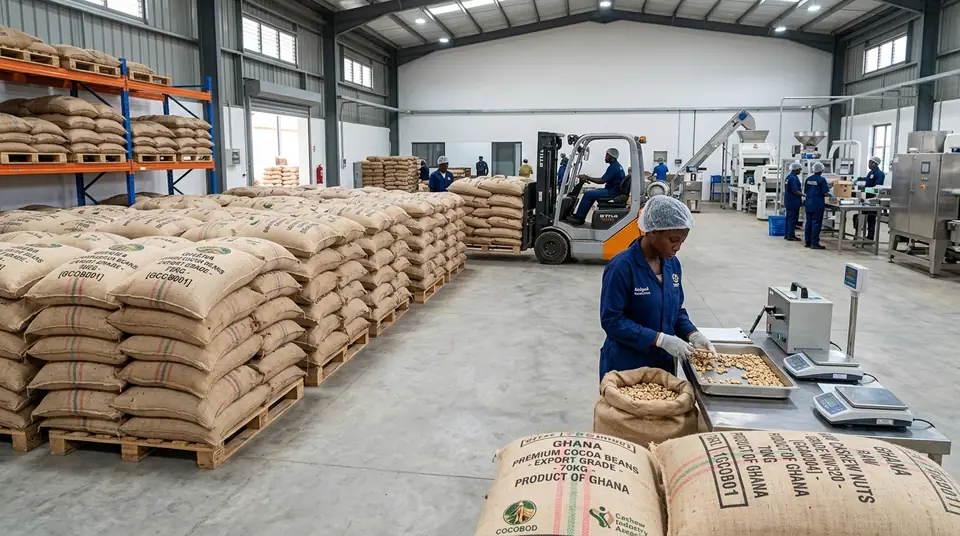
In Kenya, tea exporters must register with the Tea Board as buyers or exporters; phytosanitary certification is handled by KEPHIS.
Key points
- Tea buyers and exporters must hold a Tea Board of Kenya certificate of registration (Form TBK\TB\J on the IMIS platform; KSh 20,000 for a new application, KSh 10,000 for a renewal).
- The Tea Board lists the East African Tea Trade Association (EATTA), in Mombasa, among registered auction organisers, alongside i-Tea Limited in Nairobi.
- The Kenya Plant Health Inspectorate Service (KEPHIS) issues phytosanitary certificates, after inspection, for compliant export consignments.
- Kenya exported 594.5 million kg of tea in 2024, earning KSh 181.69 billion, to 96 destinations (Tea Board, 2024 report).
Kenyan purple tea (TRFK 306)
Kenyan purple tea comes from a variety bred by Kenya's tea research programme, TRFK 306 (also written 306/1), released for commercial production in 2011; one of its parents is an Assam-type tea plant. Its colour comes from anthocyanins, the pigments that also colour grapes and beetroot, and it shifts with the seasons: in dry, very sunny spells the young shoots fade and turn green.
It remains a niche product. The Tea Board of Kenya's 2025 report puts specialty teas at 2.82% of the 550.37 million kg produced, about 99% of it orthodox black tea; green and purple teas together came to roughly 108,500 kg. Purple tea also needs different processing from CTC black tea: in 2015 only one KTDA factory, at Kangaita, could handle it.
For a buyer, that means small volumes negotiated lot by lot. A specific auction price for purple tea, and whether it sells at the Mombasa auction or directly, is not published in the sources we checked: ask the seller and have the TRFK 306 origin confirmed. Published studies on its composition were carried out on cells or mice; they support no health claim to your own customers.
Kenyan tea in 2025: volumes, markets and the auction
In 2025 Kenya exported 652.80 million kg of tea, up 9.81% on 2024, while output fell 8% to 550.37 million kg because of erratic rainfall. Pakistan took 36% of export volumes, ahead of Egypt (13.9%) and the United Kingdom (8.6%).
The same year 379.24 million kg were sold through the auctions, carry-over stock included, at an average price of US$2.15 per kg (Tea Board of Kenya). Tea is grown between 1,300 and 2,700 metres above sea level, on both sides of the Rift Valley.
This guide summarises official texts as of the date shown. Rules change: check them with the body cited before any transaction.
Sources
- Tea Board of Kenya — certificat acheteur / exportateur (2026)
- Tea Board of Kenya — auction organisers (2026)
- KEPHIS — services phytosanitaires (2024)
- Tea Board of Kenya — 2024 performance report (2025)
- Tea Board of Kenya — Tea industry performance report 2025 (2025)
- CABI Digital Library — Purple tea: the Kenyan variety TRFK 306/1 (Baruah) (2015)
- Planta — Anthocyanin pigmentation of TRFK 306 shoots under dry, sunny conditions (Maritim et al.) (2021)
- NPR / WAMU — Kenyan farmers see green in the color purple (2015)
- Nutritional Neuroscience — Anthocyanins from Kenyan purple tea in mice (Rashid et al.) (2014)
Looking for a supplier?
Post a request for quotation: our team forwards it to listed suppliers in the relevant sector.